How to turn London into Europe’s biggest city

Individuals should be given the freedom to fulfil their potential, rather than being trapped by government policies in towns and cities that hold them back. Having vast numbers of workers in the wrong place weakens the economy by reducing productivity and wealth creation.

In a free society, successful cities and regions can rapidly expand in population, while failing locations can rapidly decline. This process of geographical change is critical for rapid economic growth and big increases in living standards.

Cities in the North of England expanded rapidly during the industrial revolution – and this was vital for their development.

However, the reasons northern cities were centres of wealth creation in the 18th and 19th centuries no longer apply. These days, their economies are largely dependent on government handouts in various forms.

Their predicament is amplified by their location – on the edge of a continent in rapid relative economic decline. High labour, energy and transport costs – and suffocating bureaucracy and red tape – also create a difficult environment for business to prosper.

However, the UK’s geographical disadvantages can be counteracted by exploiting the agglomeration benefits of a very large city. In other words, the “economies of scale” created by a huge conurbation can help to overcome the problems associated with a semi-peripheral location.

Mega cities promote clusters of expertise and innovation. A high degree of specialisation is possible, with a wide range of niche services.  Deep and complex labour markets allow better matching of jobs to skills and talents, which in turn attracts the skilful and talented.

Specialist high-end services combined with high “human capital” attract entrepreneurs and investors from around the world. Providing certain conditions are met – i.e. reasonable tax rates, light-touch regulation and relative political stability – a very large city can create a virtuous economic circle, leading to high levels of productivity and high living standards.  

London should therefore be allowed to grow as large as possible. With state-imposed constraints removed, it could conceivably become the largest city inside Europe.

The administrative area of Greater London currently has a population of around 9 million. The Greater London Built-Up Area, which constitutes the continuous, joined-up conurbation, has around 10 million people. And the wider “London Metropolitan Area” is estimated at approximately 15 million.

In the absence of state-imposed restrictions, these figures (for the sake of illustration) could perhaps grow to 12 million, 15 million and 22 million respectively. However, there should not be fixed population targets or timescales. The outcome should be the result of the voluntary choices made by individuals.  

The main policy change required is liberalisation of the planning system and building regulations. Development should be allowed in London’s green belt. Property owners should also be allowed to “densify” existing neighbourhoods with the minimum of red tape – by building on gardens, adding floors, converting houses into flats, and so on. Under-used land such as parks, playing fields and warehouses could be developed too. A dramatic increase in supply would of course put powerful downward pressure on rents and house prices.

Inadequate transport infrastructure is no longer such a major constraint on the capital’s growth. The shift to working from home (often part-time) means London can accommodate a far bigger population without putting undue pressure on its public transport system (for example by spreading the peaks). And road capacity can quickly be increased by removing various anti-car measures imposed over the last few years (such as barely used cycle and bus lanes etc.).

Furthermore, where appropriate, the capacity of rail corridors could be increased enormously by converting them into busways, which allow higher passenger flows at far lower cost than railways (meaning reduced fares and commercially viable, subsidy-free services).

Water supplies are also frequently cited as a constraint. But a short Severn-Thames link and expanded reservoirs – perhaps combined with desalination plants if absolutely necessary – would resolve this issue.

Of course there should not be state-imposed constraints on the growth of northern cities either. But the chances of say Manchester evolving into a ten-million-plus mega city are slim. London has a first-mover advantage, inertia, a better location closer to Europe’s “core” and already possesses much of the required infrastructure.

First published on the Transport Watch blog.

Why did the Conservatives become radical greens?

It’s deeply disturbing that a supposedly conservative government has been destroying property rights, undermining the middle classes and strangling the economy – all in the name of the environment. How on earth did this happen?

Looking at the incentives facing the party’s leaders might provide some clues.

The obvious explanation is they’re doing it to attract votes. To win the next election they need to go beyond their core support. So, they have to reach out to the centre, perhaps to voters who might consider backing the Lib Dems.

Such calculations also factor in the marginal seats needed to retain a majority and the particular voter groups they therefore need to attract. To give a specific example, a “green” policy of opposing Heathrow expansion might be cynically designed to gain marginal seats in south-west London.

However, if this strategy has been at play, then it is likely to have backfired spectacularly. The government’s green agenda is a major factor in a cost-of-living crisis that has caused its support to plummet.

Moreover, the Conservative majority relies on working-class voters in the North and Midlands – a group that has suffered particularly badly as energy bills have rocketed and real incomes declined.

Many voters don’t connect the cost-of-living crisis to green policies. Indeed, media propagandists deliberately hide the link by blaming other things.

The inconvenient truth is that the UK’s heavy dependence on imported gas is a direct result of the renewable energy agenda and in particular the forced closure of cheap and reliable coal-fired power stations. But whether voters understand this or not, they still tend to blame the government for the consequences and the marked decline in their living standards. 

So, the “going green to attract votes” hypothesis doesn’t stack up. If this was a factor, then it has been a huge miscalculation. In any case, more moderate measures combined with some environmentalist rhetoric could have ticked the “green box” without doing such immense damage to the economy.

A second possible explanation is that the government has to conform with the “metropolitan elite” in order to retain power. This group, so the theory goes, has different values and priorities to the rest of the country. It also has immense influence because it dominates the media, civil service and other pillars of the establishment.

London-centred, its members use public transport far more than people outside the capital. An often-vocal minority cycle to work. Many of them live in gentrified, densely populated inner-city areas, a very different environment to that experienced by the suburban and rural rich.

15-minute cities might seem normal and desirable to them. But in reality, the purchasing power of this group and the local services it supports are very far from the norm, and could not be replicated in more than a relatively small number of locations.

It seems likely that support for radical environmentalism is significantly stronger in the metropolitan elite than the general population. The Conservatives perhaps fear that reversing the radical green agenda would alienate this group, leading to negative media coverage, obstructive behaviour by the civil service and other problems.

Some Conservative politicians may also want to be part of this “elite” in order to enjoy the status, connections and financial rewards that come with it. If they reject the green agenda, they risk being ostracised.

It’s alarming to think that a small, privileged minority, concentrated in London, effectively has the whip hand over policies that affect the whole population, but this conclusion is certainly plausible when the incentives facing policymakers are considered.

A third hypothesis can almost certainly be rejected. Cynics often believe that politicians effectively get paid to implement various agendas.

A number of corporate interests are making vast profits from green measures. And it’s true they have a strong economic incentive to “capture” policy by investing in lobbying.

But this doesn’t seem to be taking the form of politicians benefiting financially. There are relatively few examples of former ministers getting well-paid jobs at renewable energy companies or other firms that benefit from green policies – and these may well be cases where the individuals concerned have genuine expertise in the industry. The phenomenon certainly isn’t widespread enough to explain government policy.

Moreover, there are also powerful vested interests that will lose out from the radical green agenda. They are attempting to sway politicians too – but, again, there is little evidence that this takes the form of substantial financial inducements. As previous scandals have shown, the reputational risks from exposure would be very high on both sides, which acts as a strong deterrent to any untoward activity.

Finally, there is the possibility that a significant number of ministers and MPs genuinely believe in radical environmentalism. It’s not about their careers, social status, or even the money, but ideological.

It’s striking that a significant proportion of Conservative MPs are not very conservative at all. They already support high taxes, heavy regulation, technocracy, political globalism, central planning, and rapid social change. This arguably makes them natural allies of the radical green agenda.

Their approach couldn’t be more different from genuinely conservative policies to protect the environment. These could focus on bolstering conservation and stewardship by restoring traditional property rights undermined by the state. For example, respecting private property by ending the practice of compulsory purchase would prevent a great deal of environmental damage.  

The key question is therefore how this not very conservative group came to dominate the Conservative Party and subsequently steer environmental policy in a non-conservative direction.

Whatever the real reason, the result is that the UK is effectively a one-party state when it comes to the radical green agenda. All the main parties support it and voters have little realistic choice.   

First published on the Transport Watch blog.

What to expect from the Great Monetary Reset

Lenin is said to have declared that the best way to destroy the “capitalist” system was to debauch the currency. By a continuing process of inflation, governments can confiscate, in a covert way, a large share of the wealth of their citizens.

But it’s not just radical socialists who could use inflation as a weapon of social engineering. There are elements within the “capitalist” global elite who want to replace national currencies with a centrally controlled global currency.

The euro could be seen as a trial run for this plan. It has been used as a Trojan horse to undermine the independence of its member states.

Imbalances generated by the single currency brought economic crisis to much of southern Europe. In return for bailouts, countries like Greece and Italy were effectively directly controlled from Brussels and forced to follow EU orders.

Monetary policy has also been used to threaten countries into obeying the EU elite, with handouts restricted if the “wrong” leaders were elected, or EU orders disobeyed. Now there are plans to create a central Treasury with tax-raising and spending powers. This is justified as a way of correcting the eurozone’s imbalances by transferring resources to struggling member states. When this stage is reached, the plan to create a European superstate or EU empire will be close to completion.    

In 1988, the elite-controlled Economist magazine published a cover story with the title “Get Ready for a World Currency.” It called for the creation of a world central bank and a new global currency. This was predicted to happen around 2018, so the plan seems to be running behind schedule.

The transformation could be brought about by an economic crisis – which would push national governments into surrendering their sovereignty. 

The suggested name of the world currency is telling. The Phoenix is a mythological bird associated with worship of the sun. It obtains new life by rising from the ashes of its predecessor.

So, it is quite possible that high or even hyperinflation could be deliberately engineered to bring about economic collapse, creating a pretext for a new monetary regime.

Moreover, some commentators think the elite is planning a Great Monetary Reset – which may also involve the imposition of Central Bank Digital Currencies (CBDCs).

Worryingly, these currencies can be programmable, meaning they could only be spent on goods and services that have been approved by the authorities. This level of social control could be sold to the public as a means of cracking down on criminals and the shadow economy. But it would also enable governments to “switch off” the finances of dissidents and non-compliers.

For example, people who refused an experimental “treatment” could be denied access to their own money as punishment; or perhaps severely restricted in what goods and services they were allowed to buy; or their purchases could be restricted to a particular geographical area in order to re-enforce some kind of lockdown. For tyrannical authorities, this is a far lower cost method of encouraging and enforcing compliance than, say, rounding up dissidents and detaining them in quarantine camps.

These totalitarian agendas appear to be related to the ongoing “War on Cash” and the shift to digital identity systems connected to biometric payment cards. Once again, it seems to be about surveillance and control. An engineered period of hyperinflation would raise the costs of holding physical cash and therefore accelerate the planned “reset” of the monetary system.

Another threat is the imposition of negative interest rates – in other words, overtly stealing people’s savings directly from their bank accounts. This policy is closely related to the War on Cash, and its leading proponents are also active promoters of a cashless society. 

At the moment, central banks are constrained if they want to push interest rates below zero. Savers can easily thwart their plans by removing their money from bank accounts and storing it as physical cash instead. They won’t earn any interest, but it may be better than losing out by keeping it in the bank. By abolishing cash, the central bankers want to force savers into negative-rate assets.

Negative interest rates are of course another warning sign of future high inflation. The argument is they’re needed because the economy is in the doldrums. But central bankers almost always get it wrong. They simply cannot obtain enough knowledge to successfully plan the economy. Thus, their economic forecasts are consistently inaccurate.

Loose monetary policies – for example, forcing interest rates too low – typically sow the seeds of inflationary bubbles and future financial crises, as we saw with the results of the Federal Reserve’s actions during and after the 2001 U.S. recession. (This is one reason that a temporary period of “deflation” can soon be followed by a period of high inflation).

Finally, it is worth emphasizing that if hyperinflation does not occur, a persistent inflation rate averaging 10% still has the potential to destroy a big chunk of people’s savings, particularly if interest rates stay close to zero.    

Richard Wellings

This article is a revised extract from my recent report, Hyperinflation Survival Strategies: Preparing for Soaring Prices and the Great Monetary Reset.

Image: Shutterstock

The conspiracy to ban cash

You post a controversial tweet. Next thing you know, your bank account has been frozen, and you can’t buy food or access essential services. This is the nightmarish future being planned by powerful elements within the political and corporate elite.

My recent report explains how there are plans for a Great Monetary Reset. High or even hyper-inflation is part of this, but another element is the war on physical cash and the forced shift to a cashless society.

They not only want to destroy the value of our savings; they also want to track our movements, spy on every transaction, and control how we spend our own money.

Most people are completely unprepared for this. In the worst-case scenario, their life savings will be stolen, and their pensions made worthless. They’ll be forced to rely on government handouts and forced to do as they’re told.

They should be taking simple steps to protect themselves, but instead complacency rules – even though parts of this agenda are now being implemented in plain sight.

Governments are at the forefront of this. In many countries, they’re making it harder and harder to use physical cash. They prefer their citizens to use digital payments – cards or smartphones that in the near future will be linked to a totalitarian system of digital IDs.

To give a couple of examples, in many locations it’s now impossible to pay for parking without a smartphone and payment card. And public transport is increasingly off limits to people who want to pay with physical cash.

It’s obvious why governments are doing this. The power elite are feeling threatened. The internet, while increasingly censored, has alerted a significant minority to their agenda. Myths that we live in a free society, or a democracy with a free press, or enjoy freedom of speech, have been thoroughly busted.

Their geopolitical power is also waning, as the West enters a period of economic decline. This increases the likelihood of protests and resistance. A shrinking pie makes it harder for those in power to pay off various interest groups. The rise of the East also creates alternative narratives, as emerging world powers create new propaganda outlets that challenge the incumbent ones.

Crony capitalism is of course the main cause of the West’s problems. But tackling this would mean undermining the various scams on which powerful special interests rely, including the rigged banking system. So, instead, it seems the preferred strategy is to crack down on free speech and persecute dissidents – in other words using violence and coercion to shore up the power elite’s position.

A cashless society with payments linked to digital IDs will make it far easier to impose control. Traditional enforcement methods are costly to implement on a large scale and expose the violent underpinnings of supposedly free societies. By contrast, encouraging compliance could soon be as simple as a government official clicking a name on a list of dissenters.

If they refuse to obey, people who challenge or upset the establishment might have their bank accounts frozen, payment cards disabled, or be denied access to basic services. The authorities have already started to test this out.

Vaccine passports were clearly a trial run. Many observers thought it made little sense for healthy young people to take experimental treatments given the risks from Covid were so small (the shots don’t stop transmission either). Yet huge numbers were “nudged” into compliance because they were forced to get proof of injection to keep their jobs – or even to go to a restaurant or travel.

The digital IDs/war on cash agenda isn’t just a government initiative, however. The role of big business in driving this forward is perhaps more difficult to comprehend.

I recently took a trip to the North of England. On the way back we stopped at some services. At the pizza place near the entrance, a large sign declared the restaurant “card only.” Further in, a fast-food outlet was refusing to let customers pay with cash. Hungry travellers had to wait in line before struggling to use the self-service touchscreens – which only accept cards.

Then a trip to a local supermarket. All the self-service tills are now card only. To pay with cash you have to queue up to use a staffed till. Only one was open at the time of my visit.

It’s obvious what they’re up to. They’re trying to “nudge” people to abandon physical cash. If you don’t use a card, you’ll have to queue for ages or face the inconvenience of going elsewhere.

Perhaps the retailers in question would argue that banning cash is good for business, allowing them to cut costs and pass on those savings to their customers. Yet cash-handling costs are a tiny, trivial percentage of turnover, and often compare favourably to the transaction charges associated with card payments.

Moreover, it’s hardly good business to annoy a significant percentage of customers with long delays and poor service.

In this context, it speaks volumes that the very same big retailers relentlessly promote certain agendas in their advertising, whether cultural transformation or radical environmentalism. Undoubtedly, this also alienates many of their potential customers. So, why do they do it?

The ugly truth is that Western economies are a million miles from a free market. We actually have a predominantly crony-capitalist system. For supermarket executives and other business bosses, it’s more important to gain favour with the powerful than offer a good service to their customers.

In the current system of rigged markets, company profits – and career success – depend more on special favours from government, the manipulation of state regulation, and support from financial institutions, than competing successfully by satisfying consumers’ wants. Indeed, this economic model actually functions by restricting competition, especially from small, independent firms.

As well as the carrot, there’s also a stick. A business that seriously resisted establishment agendas would face persecution from state bureaucracies. The regulations and tax rules would suddenly be applied very strictly. It might also be smeared by the controlled media and “state assets” posing as journalists, its reputation left in tatters. Banks and investment funds would threaten to pull out their money.  

The next time you see a company behaving bizarrely, angering its customers, and promoting some weird or disturbing agenda, remember who’s really pulling the puppet strings.

Richard Wellings

Image: Shutterstock

Is hyperinflation coming?

The key to understanding inflation is examining the incentives facing ruling elites. If their hold on power is under threat – and other options are not feasible – they resort to “printing” money on a massive scale. They use this new money to buy the support of special interests and pay the police and armed forces to protect them.

For the elite, it may actually be a bonus that ordinary people see their life savings destroyed by high inflation. If most of the population is occupied with day-to-day survival, then political dissent may be constrained. Loss of savings also breeds dependence on state handouts, which can be used as a tool of political control.

Ruling elites typically face existential crises during periods of turmoil. The German government resorted to hyperinflation after World War 1 and a subsequent period of severe political unrest, with communist and fascist groups engaging in often violent attempts to seize power.

The Russian crisis of the 1990s followed the collapse of communism, a huge economic shock, and was also marked by extreme political instability, with the new “neoliberal” elite under serious threat from more conservative forces.

There are numerous similar examples. It can be noted that countries with permanently high inflation also face permanent political instability, with a history of coups and revolutions, and their ruling elite under constant threat.

What are the lessons for the current situation? The West has experienced three major crises in a relatively short period. It never really recovered from the financial crisis. Central bank money-printing prevented necessary readjustment, replacing a short-sharp depression with a long period of stagnation and low growth.

Then came the pandemic – and once again the ruling elite resorted to money-printing to fund government spending, including huge bailouts for crony-capitalist corporations. This further depleted the financial buffers available to deal with further shocks.

And now a major war has broken out in Eastern Europe, with potentially severe economic consequences. Government finances are already in deep trouble, so it again seems likely that central banks will resort to money-printing on a vast scale in an attempt to cushion the short-term impact.

At the moment it is difficult to see how this could result in an existential crisis for ruling elites – with one possible exception.

The crisis is likely to exacerbate tensions in the eurozone – and the European Union and its vassals more widely. This in turn may threaten the political control of the EU elite. Continental Europe is particularly vulnerable to supply-side shocks, suffering from poor energy and food security. And these effects will be highly uneven, affecting some countries far more than others – a recipe for internal strife.

A likely scenario is that nations already suffering recession and a severe cost-of-living crisis (and perhaps resulting unrest) will be asked to bail out countries in an even worse situation.

If resulting tensions threaten to break apart the eurozone, or even the EU, there can be little doubt that the EU elite would resort to money-printing on a vast scale in order to pay off special interests in member states in an attempt to preserve its empire and hold on power.

Initially this might lead to double-digit inflation rates – but price rises can quickly get out of control. If the public lose confidence in the currency, we could see a flight to real goods followed by very high or even hyperinflation. Another possible scenario is that richer countries decide to exit the single currency, undermining the stability of a rump eurozone dominated by essentially bankrupt states.

My new report, Hyperinflation Survival Strategies, sets out the key warning signs that inflation is about to explode. It also explores the methods people use to protect themselves from soaring prices.

Hopefully the nightmare of full-blown hyperinflation can be avoided – but even an inflation rate of 10% can rapidly destroy people’s life savings.

Image: Shutterstock

An injection of tyranny: from vaccine passports to digital IDs?

The imposition of vaccine passports represents a major expansion of state power. While they are portrayed as a means of restoring pre-pandemic freedoms, in reality they will extend restrictions on people who refuse to comply.

There is also evidence that vaccine passports form part of a wider agenda to introduce biometric digital identity systems. The EU was already making plans for vaccine passports in 2018, long before anyone had heard of Covid-19. And there are other disturbing initiatives, such as ID2020, backed by powerful transnational foundations with deep links to Western governments.

The UK appears to be following a similar path domestically, embarking on a digital identity programme and undermining civil liberties more generally. There was a previous attempt to impose ID cards under Tony Blair and support for their high-tech successors clearly remains strong within the establishment.

The agenda is proceeding particularly quickly in developing countries, where – often funded by Western governments and foundations – digital ID systems are being rolled out to control access to essential services and even food.

In this context, vaccine passports can be interpreted as a stepping stone towards comprehensive digital IDs, a way of getting the public and businesses used to presenting and accepting them.

Such IDs will hold not just health records, but also financial information, biometric details and other data on individuals. They will obviously be terrible news for privacy, but they could also be made mandatory for voting, access to jobs and bank accounts, to rent housing, conduct transactions, obtain health services etc.

They would enable governments to exclude people who refuse to take part in the system and also people who carry the IDs but upset the “elite” in some way. Dissidents could find their access to basic services switched off, both to punish them and nudge them to comply.

The imposition of vaccine passports might be less worrying if it wasn’t taking place in the context of rapidly expanding state surveillance. Suspicions about governments’ real motives are raised further by the weakness of the health arguments for the policy.

It has now been openly admitted that a key reason for vaccine passports is to encourage young people to get injected. This is basically a threat: if you don’t get jabbed you won’t be able to travel easily and you won’t be able to go to bars and restaurants.

The problem is that for the vast majority of younger people, it is far from clear that the benefits of the shots outweigh the costs. At present no one knows the long-term effects of either the jabs or Covid-19, so policymakers are groping around in the dark. It’s also unclear to what extent these unconventional treatments prevent transmission. And there’s a further danger that the jabs will encourage people to behave more recklessly.

A plausible scenario is that the injections prove less effective than hoped at preventing illness and transmission. It may also become clear that the side effects are worse and more frequent than initially acknowledged by governments and the media. At the same time, the jabs and related misinformation may encourage recipients to behave as if they can’t catch Covid-19 and can’t pass it on. Such developments could at least partly undermine the stated policy objectives, and the vaccine passports agenda would be partly to blame.

Finally, any assessment of vaccine passports should examine their economic impact. It might be assumed that a certain percentage of the population will refuse the injections, perhaps because they are at low risk of either catching Covid-19 or falling seriously ill with it.

Say 10% of adults fall into this category, plus a significant percentage of children (the figure is likely to be significantly higher in some countries). Many of the businesses forced to require vaccine passports as a condition of entry will face reduced revenues. A lot of people won’t bother going through the hassle of testing, if that is the alternative. Moreover, the unjabbed won’t be distributed evenly across areas, age groups and subcultures, so certain businesses in certain areas are likely to be particularly badly affected.

Some businesses may, however, see the trade-off more positively if they view the alternative as a return to lockdown or other restrictions. Yet presenting vaccine passports as alternatives to lockdowns and social distancing relies on highly questionable assumptions about the effects of the shots on infection, transmission and behaviour. In any case, given their recent authoritarian turn, it is possible that governments will simultaneously impose both vaccine passports and draconian lockdowns this winter.

The impact of vaccine passports on the labour market is likely to be particularly serious. It looks like certain jobs will be denied to people who refuse the injections. They will find it difficult to travel overseas too. Certain employers will therefore face a reduced pool of skills and talent, potentially resulting in recruitment difficulties and staff shortages. It will be harder to get the best person for a particular role.

The opportunities for people to engage in entrepreneurship and exchanges with partners in other countries will also be diminished. Some of the uninjected may decide to reduce their economic activity in response to all the hassle and discrimination. These effects will tend to have a negative effect on productivity and therefore tend to reduce growth in output, harming government finances in the process.

In conclusion, it is far from clear that any benefits of vaccine passports will outweigh the costs. Indeed, if the objective of vaccine passports is to protect health while opening up the economy, then the reasoning behind the policy appears to be flawed. It is difficult to imagine that political leaders, or at least their advisors and officials, are unaware of the downsides. This strengthens the suspicion that there is more to vaccine passports than meets the eye. Could their real purpose be to condition the public into accepting the widespread and routine use of privacy-destroying digital IDs?

First published on the Transport Watch blog.

EU immigration: how to maximise the benefits and minimise the costs

In welfare states, the economic benefits from immigration may be eroded by the additional costs of government handouts and public services. This problem has been particularly evident with some refugee populations. For example, according to one estimate, just one in ten working-age Somalis in the UK is in full-time employment, while the vast majority are dependent on subsidised housing, much of it in high-cost London. Indeed, the welfare system may be largely to blame for such poor outcomes, due to the high effective marginal tax rates imposed on those moving into work.

Outcomes for EU migrants have tended to be more positive, with northern and central Europeans in particular exhibiting high employment rates. Nevertheless, the large numbers in low-paid work that pay relatively little tax may still impose significant costs, particularly households with children that receive child benefit, child tax credits, possibly housing benefit and/or social housing, childcare subsidies, and state education, which costs taxpayers around £5,000 per pupil.

In addition, there may be significant ‘externalities’ from migration, such as increased congestion on transport networks, crime and anti-social behaviour, disruption to settled communities and difficult-to-predict long-term effects on culture (both positive and negative). The strong tendency for BME groups to support the Labour Party is an example of a long-term impact on the UK’s political environment.

However, the costs identified are to a large extent not the consequence of immigration per se, but result from its juxtaposition with an extensive welfare state and government provision of services. In a truly free society, by contrast, support for low-income households and services such as education would be provided voluntarily. Taxpayers would not be forced to pay for them. At the same time, property owners, whether individually or in voluntary communities, would be far freer to decide how their land was used and would also enjoy freedom of association or dissociation. In other words, they could decide who would be allowed to enter their property, which, as well as residences and workplaces, might also include roads and other ‘public spaces’ currently owned by governments.

Various rules of entry could be adopted (see these case studies). For example, existing residents might vote on whether to allow individual applicants to move into their community. Alternatively, restricted covenants could require residents or workers to meet certain requirements before gaining entry. In some cases, simple rules of thumb might be used in order to minimise transaction costs. A completely open policy would of course be another option.

Rather than a one-size-fits-all policy imposed by government, different models would compete with one another, allowing market segmentation. Such voluntary associations could therefore be tailored to individual preferences. Cosmopolitans preferring a diverse cultural mix would be free to choose a community with an open approach. Conservatives placing a high value on their own traditions might prefer a model with far more restrictive rules of entry. The latter approach could prove popular with religious and cultural minorities wishing to preserve practices under threat from the influence of wider society.

Under such a system, property owners and voluntary associations would bear the lion’s share of the costs of their policies towards incomers. A market discovery process would ensue, with successful models attracting more business and unsuccessful ones declining. In this way, rules of entry would gradually evolve, tending to increase the benefits of migration and reduce the costs, while adjusting to changing conditions.

Contrast this with the one-size-fits-all policies imposed by governments. Politicians cannot obtain the knowledge required to set efficient quotas or entry requirements (such as points-based schemes or charging immigrants a fee), and such measures cannot be tailored to suit the wide variation of preferences on immigration. The transaction costs of state systems may also be high, with poor incentives to reduce them. Moreover, immigration policy will tend to be influenced by concentrated interests, for example ‘key’ sectors seeking special favours.

Despite the obvious flaws of immigration policies based on central planning by governments, the prospects for a voluntary system are slim. In the UK, there are very strict state controls over land-use, most transport infrastructure is government-owned and in both the UK and EU there are strict prohibitions on freedom of association/dissociation. Given the dominant political culture, it is difficult to envisage that these constraints will be removed in the near future.

This raises the question of which immigration policies should be adopted post-Brexit if a free-market model is off the table. The most straightforward way of increasing benefits and reducing costs would probably be to reduce substantially migrants’ entitlements to welfare benefits, social housing and government services such as childcare and education, while at the same time removing barriers to low-cost private provision, which eventually could be adopted by the whole population. In addition, market pricing could be introduced on transport networks to address congestion issues. Other things being equal, this approach would be likely to cut numbers significantly, while addressing directly the issue of costs imposed on taxpayers and pressure on public services.

It would avoid the central planning problems, special-interest capture and high administration burden of points-based rationing. But it would also contravene current European Economic Area rules on equal treatment, with implications for the deal between the UK and the EU. Nevertheless, because it would maintain freedom of movement, EU institutions and member states might consider it less objectionable than the alternatives.

Why does privatisation sometimes go wrong?

The imposition of flawed privatisation models imposes economic losses far beyond the sectors concerned. Although the problems experienced in privatised industries have largely been the result of political interference and state regulation, their failure may be misused by ideological interventionists to undermine trust in markets more generally.

Both the public and opinion-formers have weak incentives to properly investigate why particular sectors have not performed well and this ignorance can be exploited. If the political culture turns against relatively free markets, the wider efficiency losses are likely to be substantial, as more and more economic activity becomes subject to high taxes and restrictive controls.

Privatisation is a political process and as such will be vulnerable to the problems afflicting political processes in general. Almost inevitably it will be influenced or even ‘captured’ by special interests. As a result, there is a risk that the outcome is not a dynamic free market, or even a lightly regulated sector. At worst, government will regulate the market to enable special interests to extract ‘rents’ from taxpayers and consumers. Such a model would protect favoured interest groups from new market entrants, competition and disruptive entrepreneurship, while participants’ profits might well rely on state subsidies.

As public choice theory would have predicted, many of the privatisations of the 1980s and 1990s did not produce anything approximating to free markets in the sectors concerned. In some industries at least, the period might more accurately be characterised as a shift from ‘state-capitalism’ Model A to ‘state-capitalism’ Model B. This raises the question whether Model B, consisting of heavily regulated markets under nominal private ownership, delivered economic benefits compared with the direct state ownership of Model A.

The answer is likely to depend both on the characteristics of a particular industry and the regulatory structure adopted post-privatisation. In an unhampered market economy, sectors characterised by major economies of scale and vast, inflexible, long-term capital investments – such as the rail industry – are likely to be dominated by large firms exhibiting high degrees of vertical integration. The ‘command economies’ within such firms will exhibit significant knowledge and incentive problems no matter what the ownership model. Thus, ceteris paribus, the benefits of privatisation are likely to be lower in such industries than in naturally more fragmented, dynamic and competitive sectors.

Nonetheless, there are particular problems associated with state ownership that are likely to apply across all sectors. These are explained in detail elsewhere, but include politicisation, producer capture, and poor incentives for entrepreneurship, innovation and cost-control. Where state regulation ensures monopolies, such pathologies may be exacerbated by an absence of competition. The poor results became apparent in the nationalised industries of 1970s Britain. Endemic misallocation of resources led to heavy taxpayer subsidies and poor quality services for customers.

However, some of the privatised sectors exhibit broadly similar problems today. The following (non-exhaustive) analysis therefore draws on theory and recent evidence to summarise some possible reasons why artificial post-privatisation markets could fail to produce efficiency gains compared with the directly state-controlled model that preceded them:

  • Politicisation – The propensity of politicians to interfere in a sector could hypothetically increase post-privatisation, resulting in increased regulation/taxation and concomitant efficiency losses. This outcome may be particularly likely in sectors with high political salience. Any change in the status quo creates risks for policymakers, providing incentives for them to intervene. The costs of such intervention are likely to be opaque and widely dispersed, leading to limited accountability.
  • Overregulation – Politicians may face fewer disincentives to impose costly regulations on a nominally privatised sector than under state ownership. In the former case, the negative effects can be blamed on private firms, whereas in the latter they are likely to be blamed directly on the government, creating higher political costs. Voters and ‘opinion formers’ have weak incentives to become well informed about such issues. Senior officials may benefit from the salary and status opportunities provided by expanded regulatory oversight, while key corporate players in the sector may welcome additional regulation if it serves their interests (for example, by raising barriers to market entry and protecting them from competition).
  • Flotation receipts – Short-term incentives to maximise flotation receipts may encourage the creation of heavily regulated ‘rigged markets’ that reduce the risks facing investors. Large, risk-averse institutional investors, such as pension funds, may prefer a model that effectively guarantees returns rather than entrepreneurial and disruptive freed markets that threaten incumbent players.
  • Transaction costs – Artificial post-privatisation markets may depart significantly from the organisational forms likely to evolve in an unhampered market economy. It is conceivable that in some instances such artificial structures increase transaction costs compared with direct state ownership, thereby reducing allocative efficiency.
  • Restructuring costs – Structural changes may weaken ‘social capital’ within a sector by disrupting working relationships, as well as losing specialist, often asset-specific knowledge and skills through the departure of long-term staff. Organisational cultures may also be weakened or destroyed. The role of such factors in efficient operations may be somewhat opaque to both policymakers and senior management.
  • Moral hazard – If sectors comprise ‘essential’ infrastructure then firms can be sure that governments will step in if they fail. Indeed, rules are typically in place that set out how this would be done. Limited liability laws and the use of special purpose vehicles also limit downside financial risks. These factors may encourage excessive risk-taking and a concomitant misallocation of resources.
  • Rent-seeking – A combination of heavy regulation and private ownership could potentially increase incentives for special interests to engage in rent-seeking activity. Profit-making businesses might have stronger incentives to lobby for regulations and subsidies that increase their profits than the less commercially minded managements of state industries. There is even a danger that ‘crony capitalism’ could emerge, as observed with privatisations in post-Soviet economies.


This is an edited extract from Without Delay: Getting Britain’s Railways Moving.

The dangers of hyperinflation in Ukraine

?????????????????????????????????????????????????????????????????????????????????????????????????????????The Cato Institute’s Steve Hanke has estimated that Ukraine’s inflation rate is now running at 64.5% per month – well above the 50% per month that is usually used as the definition of hyperinflation. If this continues, the political and economic consequences are likely to be horrific.

Worryingly, an analysis of current conditions in Ukraine and a comparison with previous episodes of hyperinflation suggest the country is highly vulnerable to such a scenario.


The hyperinflation process

While the political economy of hyperinflation is often complex (see below), in simple terms it is caused by governments creating large amounts of money. Instead of funding public spending through borrowing from investors or collecting taxes, governments print money or create it electronically.

Expectations then come into play. As governments rapidly debase the currency, individuals lose confidence in the money. More and more people expect its purchasing power to decline. They try to reduce their cash holdings to limit their losses from its depreciation.

Money then becomes like a hot potato. People try to pass it on as quickly as possible. The velocity of money explodes as it circulates far more rapidly through the economy.

There is a ‘flight to real goods’ as money is exchanged for items expected to more reliably hold their value, such as cigarettes and tinned food. This results in what Mises termed a crack-up boom.

Eventually, the transaction costs of using the money rise to such an extent that it is rendered useless and new forms of money, such as gold, foreign currency – or even cigarettes – are used instead, along with barter.

In the meantime, high rates of inflation have made economic calculation almost impossible, and huge malinvestments have taken place. The later stages of hyperinflation and any subsequent stabilisation, are generally marked by a painful adjustment process as these malinvestments are liquidated, and governments slash spending and/or raise taxes.

The Weimar Republic

Only by looking at the detail of particular episodes of hyperinflation does one begin to appreciate its horrors.

The first sign of trouble in Germany was when it went off the gold standard in 1914. The government then borrowed and printed money rather than raising taxes to pay for the war.

By 1917, the amount of money in circulation had risen five fold. The main surge in prices came after the war ended, however. The people had been hoarding cash during the conflict, for security, and because many goods were unavailable.

Then, in 1919, this money came flooding back into the economy – prices rose by around 300% that year.

It was then that people lost confidence in the currency – this mindset not helped by the Treaty of Versailles and the hefty reparation payments imposed on Germany. The flight to real goods began, and the hyperinflationary process accelerated.

There was also a problem for a government committed to maintain, as far as possible, its spending levels, in that high inflation made it in some ways even harder to collect tax to balance the budget. Eventually they ended up adjusting taxes by the month. But another problem was that companies would deal in foreign currencies using foreign bank accounts, to avoid holding Marks, making tax avoidance easy. The increased use of barter also didn’t help the collection process.

Germany also faced enormous instability, and this perhaps partly explains politicians’ unwillingness to exact big public spending cuts and their preference to use the ‘hidden tax’ of inflation to fund expenditure. There were hundreds of political assassinations and both the communists and national socialists threatened the nascent democracy, while the French were trying to break the country up by establishing a Rhenish republic.

Indeed it was after the French invaded the Ruhr in January 1923 – Germany’s industrial heartland – in retaliation to default on war reparations – that inflation accelerated to the level that has become the stuff of legend.

The German government lost a major source of revenue, but insisted on funding the Ruhrkampf, the struggle against the French occupation, and kept paying out dole for unemployed workers in the Ruhr.

Even at the end of 1922, the cost of living had risen by 1500 times since the war, while wages had gone up around 200 times.

But the worst was yet to come. The cost of living index, fixed at 1 in 1914, had risen to an average 15 million by September 1923, 3,657 million in October and 218,000 million in November – when the Mark was finally abandoned.

By this stage, only 1% of the government’s budget was funded from tax receipts, the rest through printing money.

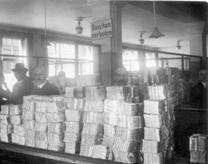
In the last months of the Mark, people would queue outside banks with buckets and wheelbarrows because so much currency was required to buy basic goods. Local authorities and large firms were allowed to issue their own notes in lieu of Marks, to address the shortage. Around 300 factories were employed to print notes.

In the worst period, a cup of coffee that had cost 5000 Marks would cost 8000 Marks by the time it had been drunk. Diners’ restaurant bills would rise as they ate. Newspapers would list new prices for tram and taxi fares every morning.

Thieves would steal baskets and suitcases full of money, but leave the money and keep the containers.

It played hell with economic calculation and many businesses shut down in the last months.

Wider social effects

Another result was widespread famine in the large cities. Malnutrition was endemic and disease rife, particularly TB among children.

Although the harvest had been good, farmers were unwilling to exchange food for worthless currency. So the cities starved and the inhabitants ate rats and dogs to stay alive.

In contrast, farmers were doing rather well. Their fixed rate mortgages had dwindled to nothing. They could barter food for luxury goods from the urban middle classes, so farms would boast cars, expensive jewellery, fine furniture, grand pianos etc.

Of course, the urban middle classes saw their wealth destroyed by the inflation, and ended up selling valuables for essentials. Those relying on savings income were in a particularly poor position, and often ended up in the soup kitchens.

As an aside, it was very difficult to protect one’s wealth. There was a mania to invest in shares, and companies did well initially in the ‘crack-up’ boom, but by 1923 most shares were trading at a tiny fraction of their 1914 values, measured in pounds, and dividends had declined even more. In terms of purchasing power, shareholders were looking at a loss of 90% plus, much better than cash or government bonds, but still an absolute disaster. Rental property was also a disaster since rent controls stopped landlords raising rents in line with inflation. By 1923, foreign students with dollars were able to buy rows of houses in Berlin using their allowances.

Gold and foreign currency were far better inflation hedges, and both were in high demand during the hyperinflation, though even with these you would tend to lose significantly in terms of purchasing basic goods. Possession of such goods, such as coffee, sugar and fuel, not to mention food-producing land, was perhaps the surest insurance policy.

In the initial stages, the working classes did a bit better than the middle classes.

They received more frequent wage increases thanks to the political power of the unions, but eventually they lost out as factories and coal mines closed down, and millions ended up unemployed on a pittance of dole money.

Entrepreneurs, particularly currency speculators often did well, and those who could obtain foreign currency could pick up assets at bargain prices in the later stages of the inflation. There was great resentment at their success, while most people were borderline starving.

Urban unrest

Given this boiling cauldron of suffering and resentment, it is unsurprising that there was significant urban unrest. Linz in Austria, which was also affected by hyperinflation, was plundered by a raging mob, with shops looted. They didn’t just steal, they also smashed up fittings and furniture. Food shops were looted in Berlin and there were numerous riots in just about every city in Germany. Parties of workers raided farms, slaughtering animals and tearing the meat from their bones, before torching the buildings.

State of emergency

Predictably all this unrest led to a government crackdown, and in September 1923, seven articles of the constitution were suspended and a state of emergency introduced.

There could now be restrictions on personal liberty, freedom of expression, freedom of the press and freedom of association. The army and the police could interfere at will with postal, telegraph and telephone services, indulge in house searches, and confiscate property.

Incitement to disobedience could be punished with imprisonment or a fine of up to 15,000 gold marks. If lives were endangered the punishment would be penal servitude. Death would be the penalty for the ring-leading of armed mobs, treason, arson or damage to the railways.

The parallels with Ukraine

Unfortunately, these are the kind of developments that could afflict Ukraine if hyperinflation continues to take hold. Worryingly there are striking parallels with the situation in 1920s Germany.

In particular, the Ukrainian government faces an existential crisis combined with a collapse in tax revenues, meaning there are strong incentives for policymakers to attempt to maintain some semblance of political stability by printing money to buy-off various interest groups – in the short term at least.

The strong presence of potentially destabilising far-right groups in both the government and the military is an especially disturbing aspect of the current situation. And as in Germany, there are also some groups that could potentially profit from a hyperinflation episode.

Ukraine’s corrupt oligarchs, several of them holding political office, own vast assets abroad, and, unlike ordinary Ukrainians, are to a large extent insulated from the currency collapse. Along with overseas investors with hard currency, they may find opportunities to buy valuable Ukrainian assets at bargain prices during the crisis. Of course, this assumes that hyperinflation does not result in the nightmare scenario of some form of totalitarian regime coming to power.

Given the obvious risks, it is absolutely vital that the Ukrainian government changes course quickly before hyperinflation becomes entrenched. This perhaps means enacting spending cuts and doing as much as possible to de-escalate the political crisis and restore confidence.

Further reading:

When Money Dies by Adam Fergusson

Human Action by Ludwig von Mises

Unless otherwise stated, all articles on this website are written in a personal capacity.

Oxfam completely wrong on global inequality

In this television debate, I argue that current concentrations of wealth are largely the result of pervasive state intervention, including bailouts, quantitative easing and monetary inflation more generally (explained in more detail here). Oxfam’s proposals to address inequality by further expanding the role of government are likely to be counterproductive. High taxes and heavy regulation trap the poor in poverty.