How to destroy crony capitalism

The recent Oxfam report on inequality and the ‘top 1 per cent’ is riddled with statistical errors. Worse still, its proposed solutions risk harming the poor through ill-conceived government interventions.

Nevertheless, current patterns of wealth distribution raise important questions about ‘crony capitalism’ and the extent to which concentrated special interests have succeeded in rigging markets to benefit themselves at the expense of the wider population.

As might be expected in ‘state-capitalist’ economies characterised by high public spending and pervasive regulation, it would appear that a significant proportion of the ‘top 1 percent’ do indeed owe a large part of their fortunes to special privileges granted by governments.

Several powerful ‘crony capitalist’/protected interest groups can be identified, including:

  • Elements of the financial sector propped up by quantitative easing, monetary inflation more generally, bailouts, taxpayer guarantees, regulation, tax breaks, government-imposed monetary systems, state borrowing etc.
  • Beneficiaries of government contracts, who are often well connected to the political and bureaucratic elites who determine official spending priorities.
  • Landowners whose property was stolen by the state and then transferred into private ownership. This category would include many of the European aristocrats who still make up a significant proportion of their national rich lists, but could also be extended to include mining, energy and agribusiness enterprises benefiting from government land-theft around the world.
  • Property developers, often well connected to political elites, who are able to gain permissions that are unavailable to the general population due to planning and building regulations, and who profit from the resulting scarcity value. They may also be indirectly subsidised by taxpayer-funded transport infrastructure and regeneration grants.
  • Enterprises dependent on state protectionism in the form of illegitimate ‘intellectual property rights’ such as patents.
  • Professionals whose lucrative jobs depend on regulation and/or whose high remuneration relies on occupational licensing. Examples include lawyers, doctors and accountants.

Some of the individuals and firms benefiting from special privileges could of course also thrive in an unhampered market economy based on voluntary exchange – but it seems likely that a high proportion of the above groups would either be eliminated entirely or see a major fall in their relative wealth in the absence of state protection.

The precise impact on overall inequality would depend on the social structures that evolved under a system based on free exchange. However, it is clear that both patterns of wealth distribution and absolute levels of wealth would be very different if markets were freed. Crony capitalism, special-interest influence and rent-seeking behaviour tend to undermine genuine wealth creation. Accordingly, the emergence of ‘distributional coalitions’ is a serious problem for contemporary ‘state capitalism’.

Tackling the cronies will not be easy, but identifying some of the most egregious special interests provides a useful starting point. A combination of honest, free-market money and deregulation would destroy the privileges of the financial sector. Dramatically shrinking public spending would undermine the government contractors. Scrapping patents would subvert that insidious form of protectionism. Planning liberalisation would reduce the advantages of crony-capitalist property developers. And land restitution (which raises many difficult issues) might start to address the widespread government-corporate theft of individual and communal property. Finally, abolishing occupational licensing would bring much-needed competition to state-protected professions.

Unless otherwise stated, all articles on this website are written in a personal capacity.

Pseudo-markets versus voluntary networks – libertarian strategies for rolling back the state

broken chain 197Libertarians should not put much faith in the extension of ‘pseudo-markets’ as a means of rolling back government. A more radical strategy is needed.

The pseudo-markets approach involves setting up some kind of market-like structure in a largely government controlled sector. A typical example is education vouchers. Parents receive state-funded vouchers, which they then use to ‘purchase’ education for their children. To the extent such systems facilitate choice, competition and entrepreneurship they may provide benefits for participants. But there are also significant downsides. Pseudo-market structures are often afflicted by high transaction costs (partly because parasitic special interests benefit from artificial complexity). And since state funding is retained, the misallocation of resources remains entrenched and pervasive. Using education once again as an example, this could mean that government would carry on funding the teaching of those children who were gaining little from formal education, or indeed losing out due to the opportunity costs.

Moreover, with government funding comes government control. Under any plausible voucher system, only education providers that met certain politically determined criteria would qualify for state funding. In practice this would mean official control over the curriculum and other key elements such as admission rules. Even if a more flexible system were introduced initially, it would only take a few scandals – renegade schools adopting practices that were deemed unacceptable – for stricter eligibility controls to be instituted.

Another highly regrettable aspect of pseudo-markets is their creation of ‘distributional coalitions’ of groups that depend on government subsidies and regulatory privileges. Given strong financial incentives, private firms providing voucher-funded schooling would likely be far more effective at rent-seeking than the moribund government institutions they replaced. Similar examples abound, from the US ‘prison-industrial complex’ to Britain’s ‘privatised’ rail industry. Indeed rent-seeking activities may actually lead to an expansion in government support, with even more resources appropriated through taxation.

These state-dependent special interests would also have strong incentives to capture the regulatory framework in order to shut out competition and increase their returns. Thus large education firms would inevitably lobby for government protection in the form of stricter licensing of providers. They could also successfully promote expanded services to politicians, as a means of achieving various social objectives. Similarly, potential investors such as state-privileged pension funds favour rigged markets in order to reduce risk and guarantee returns. And parent-voters are likely to resist any attempt to reduce the value of handouts such as education vouchers, particularly given the skewed distribution of the tax burden. Indeed, the relative transparency of vouchers etc. compared with more opaque intra-state funding mechanisms would arguably make it even harder to reduce government spending. It is easy to see how the introduction of pseudo-markets in so-called public services can degenerate into yet another shakedown by special interests.

If pseudo-markets risk being counterproductive in terms of rolling back the state, they do at least provide lessons for the development of more effective strategies. Incentive structures would appear to be a key consideration. Clearly the retention of an element of state funding encourages rent-seeking behaviour that undermines attempts to reduce government involvement. This suggests that instead of attempting to reform ‘public services’, libertarians should focus their efforts on approaches that reject them completely. Accordingly, activists should develop strategies that first bypass and later supplant state institutions entirely.

Samuel Edward Konkin argued that a libertarian society could be achieved through the extension of the counter-economy – non-legal shadow markets that, due to their voluntary nature and greater efficiency, would eventually displace governments. The plausibility of such an outcome may be questioned in the context of modern surveillance states. Nevertheless, a less ambitious ‘quasi-agorist’ or ‘neo-agorist’ approach that sought to extend non-state networks could indeed be an effective strategy for undermining dependence on and support for government services.

Konkin was also highly sceptical about the efficacy of libertarian participation in politics. Yet, to the extent that libertarians do have political influence, it should perhaps be targeted towards removing those regulatory barriers that prevent individuals, families and communities from bypassing state institutions. Looking at education once again, this might for example involve campaigning for the removal of legislation that prevents homeschooling, requires the licensing of non-state schools or mandates education up to a certain age. Many such rules are relatively obscure and have little political salience, suggesting that in some instances concentrated pressure would result in reform.

Of course in some places, such as the UK and in many US states, there are relatively few barriers to methods of opting out such as homeschooling. Effective strategies may then revolve around raising awareness of these possibilities through the dissemination of information and practical methods of implementation. Ivan Illich, for example, advocated the development of ‘learning webs’ which would allow children outside formal state schooling to access appropriate expertise and learning materials. Indeed, contemporary homeschooling networks pool skills and materials to enrich children’s education and capture economies of scale.

Such non-state networks are clearly far superior to pseudo-markets in terms of preserving and extending liberty: Provision is voluntary and does not depend on theft of resources; incentives for rent-seeking are absent because there are no government officials to lobby for funding/special privileges; top-down politicisation and social engineering is extremely difficult to impose on such decentralised structures; and allocative efficiency is likely to be much higher than under state systems, because the investors in education (i.e. parents, extended families and small community groups) possess local, time and place specific knowledge (e.g. the talents of a particular child and local employment opportunities), as well as having strong incentives to control costs.

Libertarian objectives are also enhanced by the wider effects of extending non-state networks. Reduced dependence on government handouts is likely to undermine political support for predatory politics and the funding of ‘public services’. At the same time, non-state networks that develop in a particular sector can extend into other activities. For example, connections that develop through a homeschooling network can form the basis of counter-economic activities and the voluntary exchange of goods and services outside government regulatory frameworks. Networks could also develop around subcultures that resisted governments on ideological grounds, effectively becoming refuges for political dissidents (e.g. by facilitating escape to a safe location). Thus a strategy of exiting ‘public services’ and developing voluntary alternatives has the potential to snowball into the creation of resilient sanctuaries from the state offering protection from government aggression. The contrast with counterproductive pseudo-markets is stark.

Unless otherwise stated, all articles on this website are written in a personal capacity.

The global assault on stateless societies – and why libertarians should be concerned

War_on_Terror 200x145‘African leaders like to settle nomads. Nomads make it hard to build a modern state, and even harder to build a socialist state. Nomads can’t be taxed, they can’t be drafted, and they can’t be controlled. They also can’t be used to attract foreign aid, unless you can get them to stay in one place.’

Michael Maren, USAID (quoted by Murray Rothbard)

When assessing the effect of their activities, libertarians tend to focus on the West. It is difficult to argue that libertarians have been successful at rolling back Western states. Government remains pervasive and much of the nominally private sector now depends on state-granted privileges. But, more positively, the recent explosion of interest in libertarian ideas, together with the growth of the libertarian youth movement, are grounds for optimism that active opposition to big government will increase in the future.

Looking outside the West, the picture is also mixed. There is little evidence of a genuine libertarian movement of any size, but in many regions political elites have at least adopted models of state capitalism that allow some space for individual ownership and entrepreneurship. Government is still extensive, but the state has arguably retreated somewhat since the height of the communist era, and libertarian-influenced ideas in economics may have played a part in this.

Yet there has been another far more negative development that barely registers in debates over libertarian strategy. This is the ongoing assault on the world’s stateless societies – and in many cases their destruction. The history of this process is of course very long, and includes the conquest of what is now the United States. It continues today in aggressions across the world, actions that in many cases long pre-date the War on Terror.

But the attack on stateless societies is not just being conducted through war and conquest. A more insidious process is underway throughout much of the world. This involves government officials counting and registering individuals in de facto stateless areas and forcing or bribing them onto biometric identity registers (sometimes with compulsory ID cards). The state often gives itself formal title to their land (which may then be sold by corrupt officials to palm oil producers, timber firms, or mining companies), while various subsidised programmes undermine state-free lifestyles through the provision of aid. Traditional means of subsidence that are independent of government are destroyed through the appropriation of land and resources, breeding state dependency and killing off local cultural practices. This is the typical pattern from the forest peoples of India to the tribes of Papua New Guinea. Needless to say, the crackdown on stateless societies, including biometric ID programmes, is to a large extent funded by Western foreign aid.

So, why should libertarians be worried about the assault on stateless societies? Perhaps the main reason is the importance of these and other sanctuaries from the state in acting as a check on government tyranny. Individuals and groups may wish to exit in order to preserve their traditional religious and cultural practices, or to avoid losing their freedom in other ways such as slavery (either directly or indirectly via punitive taxation and other takings). In The Art of Not Being Governed, James C. Scott describes some of the strategies used by stateless peoples in SE Asia to avoid the various predations of nearby states. The existence of ungoverned territory was absolutely crucial to their success.

Stateless zones also offer the possibility of exit for political dissidents. For example, de facto stateless regions of central Asia provided refuge for opponents of the kleptocracies of the Persian Gulf. Without such sanctuary they faced kidnap, torture, extended imprisonment and execution as a result of their views. (Whether or not one finds the opinions of such individuals objectionable is beside the point.) Transnational institutions, international arrest warrants and extradition treaties arguably increase the importance of such refuges.

The exit option has the further benefit of acting as a restraint on the behaviour of states themselves. If political elites steal too much they risk generating a vicious circle as their subjects decide to leave and the returns from taxation and/or serfdom decline. Indeed, it is often the most entrepreneurial and talented who have the strongest incentives to move out. While attempts may be made to prevent exit, these also raise the costs of predation. Thus the presence of sanctuaries from the state will tend to reduce the extent of government in other areas by acting as a check on states’ ability to seize resources.

Ungoverned territories also serve as bases for counter-economic enterprises that circumvent the prohibitions on trade imposed by governments. For example, the Darien Gap and the western fringes of the Amazon rainforest play key roles in the cocaine trade; North-West Pakistan and Afghanistan in hashish and heroin. Whatever the pros and the cons of such activities, these sanctuaries help ensure freedom to choose rests with the individual rather than the state.

Finally, it is worth remembering that the ongoing aggression against stateless societies is very costly in itself, inflicting violence and suffering in the targeted regions, while at the same time requiring large increases to the tax burden and government debt in the West and the misallocation of economic resources on a grand scale. The negative impact of overseas conflicts on domestic liberties is also well established.

But what of the argument that stateless societies are very far from free, that they are frequently characterised by cultural practices that severely restrict the liberty of women and other groups? While traditions vary enormously, and some do indeed seem abhorrent according to Western mores, groups within stateless societies typically do not have the capacity to aggress against individuals on anything like the same scale as states. One should also take into account levels of development and the logistics of surviving in the often very harsh and sparsely populated mountain/desert/jungle environments where stateless arrangements still exist. Even if desirable in principle, imported ideas such as ‘liberal democracy’ may be difficult or impossible to introduce under such conditions.

It is also incorrect to assume that economic development is impossible in stateless societies. This misconception partly results from the difficulty of measuring and incorporating their economic activity in standard GDP statistics. Trade with surrounding areas means such zones – when unmolested – have typically enjoyed significant improvements in living standards. Indeed this even appears to have been the case in the recent period of ‘anarchy’ in Somalia, despite the endless interference of outside powers.

Western politicians wishing to ‘free’ stateless societies should first explain how they would do so without violating the non-aggression principle. Would they use force to change cultural practices they abhorred? Would they appropriate resources from individuals in the West to fund their mission? And could they be sure their intervention would be successful and not counterproductive? For example, might it make target groups even more hostile to interactions with outsiders and their ideas, or alternatively incentivise them to become dependent on foreign aid handouts? The record of such initiatives does not augur well.

In conclusion, stateless societies still have a valuable role to play in the preservation and expansion of liberty. They comprise an important sanctuary from government and may bolster other sanctuaries within state-governed territories, including the counter-economy and various sub-cultures. In terms of libertarian goals, exit strategies that build up such pockets of resistance may well prove more effective in extending liberty than attempts to roll back the state through politics. This also implies that to the extent libertarians do have political influence a focus on opposing the assault on enclaves of statelessness would pay large dividends (for example, criticism of policies such as foreign aid and military intervention).

Those who hope liberty will be delivered by extending international institutions are surely terminally naive, as well as inconsistent (what about the force required to impose such a framework on the unwilling?). Such governance structures will inevitably be captured by special interests and, as with any major concentration of political power, there is a significant risk tyranny will follow. At that point, defenders of liberty will need an escape route. The importance of competition and the possibility of exit cannot be overstated.

This essay is based on the first part of a presentation on ‘Rothbard versus Konkin on Libertarian Strategy’ given to the Libertarian Alliance in October 2013.

Unless otherwise stated, all articles on this website are written in a personal capacity.
Why libertarian groups should not take government money

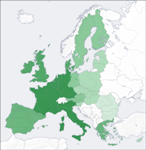
EU_enlargements_map 150x150 It is difficult to think of anything more hypocritical than libertarian groups taking state money. But worryingly the vast majority of organisations in continental Europe that style themselves as ‘free-market’, ‘libertarian’ and ‘classical liberal’ are funded with money appropriated from taxpayers. And given that libertarians in the US and UK spend a great deal of time arguing against foreign aid, it is rather ironic, to say the least, that many of these groups have been willing recipients of aid money from the US, EU and other governments.

This is not just a matter of principle. The government money has typically been tied to particular research projects and events programmes. These have promoted policy agendas that a high proportion of libertarians would find deeply objectionable and that bear little relation to genuine free markets.

Unsurprisingly there is a close correlation between such output and key priorities of the European Commission and US economic/foreign policy. Thus one observes a plethora of reports and events on deepening European integration and harmonisation; on strengthening the protection of ‘intellectual property rights’ – a particular focus of US lobbying; on cracking down on the informal economy (Konkin must be turning in his grave); on introducing pseudo-markets, coercive welfare systems and sham privatisations; and on entrenching the special privileges of large corporations through rigged-trade agreements such as TTIP.

Needless to say, senior figures at these organisations have frequently been prominent apologists for US foreign policy, even if this has meant completely betraying basic libertarian principles. Many of these state-funded bodies have also enjoyed an unhealthily close relationship with political elites, particularly in some of the smaller central and eastern European countries. Staff have often gone on to assume senior positions within governments, while some organisations have engaged in detailed policy engineering in cooperation with state bureaucracies.

Such politicisation is tempting – concrete examples of political influence make it easier to attract donations from special interests. But it’s also very dangerous. It increases the temptation to sell-out on principle and distorts research priorities towards those areas most helpful to political elites, while deterring organisations from criticising their political patrons. Worse still, it can do serious long-term damage to the libertarian/free-market movement when initially sensible policies are captured, distorted and rendered dysfunctional by state agencies, politicians and vested interests. Take the numerous botched privatisation programmes that resulted in crony capitalism and/or inefficient rigged markets. Fed through the government grinder, they have brought immense discredit on libertarian ideas.

This is not to say that the overall impact of these government-funded groups has necessarily been negative. Often they have been effective at raising awareness of the dangers of heavy taxation and high inflation, for example. Their agenda may well be preferable to many of the other statist traditions in the region. Perhaps the main objection is therefore their use of terminology – how they describe themselves as libertarian and free-market, pepper their literature with the words ‘freedom’ and ‘liberty’, when in reality they are promoting a particular model of state-capitalism that largely serves certain special interests in the West. And given their prominence, there must be a danger that potential libertarians in Europe will be led astray. Students may not realise that the ‘libertarian’ events they attend or websites they visit are funded by the EU, German government or USAID, and accordingly promote worldviews that differ markedly from genuine libertarianism.

Finally, it should be noted that it is unlikely to be in these organisations’ own interest to continue taking government money. Their dependence on state funds undermines their credibility, not only with the wider libertarian/free-market movement, but also among ‘opinion formers’ in their own countries. At worst, they risk being viewed as sock puppets for the US and EU, particularly as the rise of the internet and social networking makes it increasingly difficult for them to keep their state-funding secret.

These groups have important lessons to learn from organisations that have enjoyed sustained, long-term success in the US and the UK: don’t take government money, stick to your principles, and keep politicians at arm’s length.

Unless otherwise stated, all articles on this website are written in a personal capacity.

Why the new snooping law threatens individual freedom

Those people who hoped the coalition government would roll back the surveillance state must be deeply disappointed. Although the new snooping law is being sold as a replacement for existing rules, the reality may be rather more worrying.

According to NO2ID:

“The Government’s Data Retention and Investigatory Powers Bill (DRIP) is much more than a replacement for existing regulations…It gives future Home Secretaries sweeping new powers to order telephone and internet companies to keep almost any sort of information about their users.”

Guy Herbert, General Secretary of NO2ID adds:

“This is a classic database state scheme for mass surveillance that can be indefinitely modified once it is on the statute book. A DRIP can easily become a torrent.”

While the government’s rhetoric has focused on the threat from terrorists and paedophiles, it is important to remember that there are many good reasons why people behaving ethically would not want to be monitored by the authorities.

For example, a whistleblower might be working to expose government wrongdoing, such as corruption among officials or lies told to foster support for a particular policy. Information obtained through surveillance could potentially be used to hamper such activities or to deter people from speaking out.

There could also be negative implications for financial privacy and for the dissemination of unpopular political views by ‘dissidents’ (the latter in the context of the UK’s restrictions on free speech on certain issues). The danger of a ‘ratchet effect’, perhaps in the context of some emergency or the election of a government with more authoritarian instincts, should not be dismissed.

The misallocation of resources in state education

The British government spends a staggering £90 billion per annum on education. It is the largest item after health and welfare. However, there is relatively little discussion of whether resources are being allocated efficiently. Are current patterns of spending on education justified by the economic returns? There are good reasons to be sceptical.

Economic theory suggests that a highly politicised, bureaucratic and centrally-planned ‘one-size-fits-all’ approach is likely to be a poor way of allocating scarce resources. Incentives to maximise returns are weak, the scope for market segmentation is severely limited and officials cannot access relevant information. Such a system is also prone to capture by groups promoting particular ideological agendas and/or the interests of producers at the expense of efficiency.

In this context, it is unsurprising that the misallocation of resources appears to be endemic under the current state system. Firstly, a relatively high proportion of young adults leave school having failed to gain basic skills. For example, a recent study found that 17 per cent of school leavers in England were functionally illiterate. It is difficult to argue that the vast cost of such pupils’ schooling is delivering significant economic benefits. Then there is another large group, partly coinciding with the first, consisting of those who move on to work in low-skilled occupations demanding little of the knowledge learnt (or not) in thirteen or fourteen years of compulsory education. People who spend long periods outside the labour market comprise a third group for whom the returns on investment are questionable.

Finally there is the issue of opportunity cost, of which the current system takes little account. For some pupils, the time spent in compulsory schooling might be more profitably spent on alternative activities. The mechanically talented could perhaps benefit more from learning workplace skills, while the academically or artistically gifted might thrive by developing their own interests rather than studying the National Curriculum. There is relatively little scope to make these trade-offs within the existing approach. Moreover, it is important to consider the marginal benefits of state spending on schooling rather than focusing simply on the final outcomes. Children pursuing alternative paths would not be consigned to some kind of educational vacuum; they could learn from parents, siblings, peers, books, computer software and various other sources (note the work of Ivan Illich on learning webs).

Restoring resource-allocation decisions to parents and extended families would help to resolve the problems associated with state education. The financial incentives to avoid squandering resources would be very strong indeed, since there would be a direct effect on household budgets. And competition among providers for parents’ fees would facilitate entrepreneurial discovery, innovation, cost savings and a high degree of market segmentation. Educational services could therefore be more precisely tailored to a child’s circumstances and abilities. Perhaps most importantly, those closest to the child will tend to know most about his or her potential and will make spending decisions accordingly.

‘Free-schools’ policies also have the potential to increase market segmentation and drive up standards through enhanced competition, but continued state control and the constraints of government funding mean that a high degree of resource misallocation remains. Voucher systems may be more effective, particularly if paid at a relatively low rate with families allowed to pay ‘top-up’ fees. However, the potential economic gains from vouchers could be undermined if schooling remained subject to intrusive regulation that restricted choice and hindered the market discovery process. Moreover, these handouts would inevitably distort the incentives facing children and parents with regard to the trade-off between formal education and other options, particularly if government placed strict controls on their deployment.    

Egalitarians will of course object to the potential for inequality in a genuinely free-market system. Yet pronounced inequality is already very evident in state education. For example, wealthy parents buy into the catchments of good schools via the housing market. Moreover, under a voluntary, non-state system there would be enormous scope for philanthropic activity, such as scholarships for bright children from poorer backgrounds. Finally, any potential impact on equality must be set against the wider economic benefits of a more efficient allocation of resources in the education sector and a potentially very large reduction in government spending.

An earlier version of this article appeared on the IEA Blog on 16 May 2014

Osborne’s pre-election gimmicks do little to address Britain’s long-term economic problems

History is unlikely to be kind to George Osborne. Four years after he became Chancellor, the national debt has exploded, the budget deficit remains at dangerously high levels and an increasing share of tax revenues must be devoted to repaying creditors.

The government also faces enormous long-term liabilities which currently do not appear in the national accounts. These include pensions and healthcare commitments that are spiralling due to a rapidly ageing population. The liberalisation of pension regulation announced in today’s budget, while welcome in itself, will not make a significant contribution to resolving this problem. Indeed, other government measures, such as the triple-lock on state pension increases will greatly exacerbate the long-term fiscal shortfall. Similarly, while the Chancellor was correct to focus on poor incentives to save, the impact of policies such as expanding ISA allowances will be trivial compared with the negative effects of loose monetary policy and new disincentives to save introduced as part of the government’s flagship welfare reforms.

To add to the demographic challenges facing the UK, a series of policy decisions, implemented for short-term political gain, have done lasting damage to the future prospects of the economy. One of Osborne’s first moves was to raise harmful taxes such as VAT in a misguided attempt to reduce the budget deficit and avoid additional spending cuts. It has backfired spectacularly by suffocating economic activity, dampening the recovery and as a result actually increasing government borrowing. And despite the depth of the recent slump, the burden of regulation on business has been increased. Tax and labour-market legislation has become even more costly for firms, while energy prices have spiralled due to government intervention.

The budget failed to tackle these problems. Yet more complexity was added to the tax system: another ill-conceived crackdown on tax avoidance was combined with a series of bizarre tax breaks for favoured sectors. Disappointingly, there was no rolling back of employment rules that are hindering business activity, such as mandatory workplace pensions, the Equality Act and the National Minimum Wage. And instead of reversing the government’s incoherent green energy policies, the Chancellor treated the symptoms rather than the cause of high bills by announcing special help for the heavy manufacturing sector.

But perhaps the most worrying blunder of all is the expansion of Osborne’s policy of subsidising borrowing to ‘stimulate’ the economy. His ‘Help-to-Buy’ scheme may be effective at winning votes from certain target groups, but it is potentially very dangerous indeed for the medium-term stability of the UK economy. Asset prices are already severely distorted by the Bank of England’s policies of low interest rates and quantitative easing. The Chancellor’s sub-prime subsidies risk further inflating the housing market: more households will take on debts that could become unaffordable should interest rates return to normal levels. Thus significant default risk has been loaded onto taxpayers. There are also potentially very serious implications for the banking sector should government policies ignite another boom-bust cycle.

Indeed, there is a strong argument that a significant part of the current economic recovery is artificial in the sense that it has been generated by the easy credit policies of both the government and the Bank of England. Sceptics might point out that politicians have often boosted the economy in the run-up to general elections. The long-term consequences have usually been dire.

Reuters, 19 March 2014

London 2012: don’t forget the economic costs

The hype is building as London prepares to host “the greatest show on earth”. The government has urged everyone to come together to support the games, while dissenting views have been deemed unacceptable and unpatriotic. But no amount of political pressure can hide the fact that the 2012 Olympics are an economic failure. The claimed benefits are largely bogus, while the costs to taxpayers are immense.

Indeed, even East Londoners — supposedly major beneficiaries of the largesse — are often sceptical about the games. Residents have put up with years of disruption, with closed roads, traffic jams, dirt and noise. Pretty Victorian terraces have been overshadowed, first by construction cranes, now by the concrete blocks of the Olympic Village.

Urban planning always reflects the ideologies of the time. The architecture of London 2012 would not look too out of place on the outskirts of Moscow or Bucharest. This is not an environment that grew organically through voluntary transactions and freedom of choice; it is the embodiment of brutal, authoritarian central planning.

Major sporting events have often been associated with coercion and the threat of violence. It is estimated that 700,000 people were forced from their homes in the lead up to the 1988 Seoul Olympics; Beijing 2008 saw as many as 1.5 million relocated; the recent World Cup in South Africa was scarred by mass evictions of poor residents and informal businesses; riot police and bulldozers are clearing people off land in Rio de Janeiro for the 2016 Games.

The forcible removal of businesses and residents from London’s Olympic Park is seldom mentioned. An estimated 350 firms, employing several thousand workers, were thrown out. Some did not survive the move. Others suffered massive losses after relocating to less convenient or more costly sites.

Mass compulsory purchase of land also denied owners the profits from redevelopment. Had private owners been granted permission to redevelop their industrial sites as residential or office space, the land would have been worth perhaps ten times what they received in compensation. To add insult to injury, firms had to wait several years to obtain money owed to them.

The destruction of local businesses is just one way in which the Olympics are damaging the economy. Indeed, the frequent claims in the media that the games will provide an economic boost are blatant propaganda that defy economic logic and a wealth of empirical evidence on the impact of major sporting events.

Any perceived benefits must be set against the huge cost of the event. Projected at £2.4 billion at the bidding stage, the final government funding package will exceed £9 billion. Overall expenditure — including all the security, transport costs and so on — is likely to be significantly higher.

To put it into perspective, the London 2012 budget would be enough to reduce the basic rate of income tax by 2p in the pound (for one year) or to take hundred of thousands of low-paid workers out of income tax altogether. Inevitably the games are diverting resources from far more productive uses. Investment and consumption in the wider economy will decline as a result. This also casts serious doubt on job creation claims. For every job created by the games, it is likely that more than one job is lost in the wider economy as resources are redistributed. And unlike alternative investments, the event won’t contribute to increased living standards by raising productivity. In fact, it will destroy wealth, particularly given the long-term costs of maintaining the Olympic Park.

Even the notion that the games will encourage tourism is questionable. Tourists who would otherwise have visited Britain will avoid doing so this year, fearful of overcrowding, disruption and inflated prices. The theatres of London’s West End are particularly worried about the impact. Evidence from similar major sporting events suggests overall visitor numbers in 2012 may be disappointing.

Then there are the arguments that the games will bring regeneration to east London, which according to some indicators, remains one of the poorest parts of the UK. Undoubtedly transferring billions of pounds to this area will provide a short-term economic boost. And all that money is also likely to encourage additional private investment in the locality.

Nevertheless, it is important to recognise that plans for the development of the Stratford Rail Lands – now the major part of the Olympic Park – long pre-date the bid for the games. As early as the mid-1990s proposals were in the pipeline for the development of a commercial centre to rival Canary Wharf, based around the proposed station on the Channel Tunnel Rail Link. Indeed, it could be argued that the allocation of large amounts of land to sport has prevented more valuable uses such as shops, offices and apartments.

Moreover, public funding means resources are being sucked out of other areas to pay for it. This means regeneration in Stratford will lead to degeneration elsewhere – and that includes other parts of east London.

Areas can be regenerated but people can’t. Stratford may improve as higher socio-economic groups move in — as happened with earlier gentrifications in Notting Hill and Islington. But higher rents mean it will no longer be as attractive to the low-skilled immigrants that have populated the district in recent decades. Local councils will also have strong incentives to house problem households some distance from the Olympic Park. They may even succeed in relocating existing council tenants to exploit the profits from redevelopment.

As Stratford rises up, other districts will go downhill as poorer groups are displaced. This is already happening. Barking, four miles to the east, is probably the most shocking example. Previously respectable working class areas on the fringes of Essex are gradually being overwhelmed by the crime and squalor of the inner city, partly as a result of gentrification elsewhere and partly due to unstoppable demographic trends.

Government is playing a disingenuous role here. Significant sums are being spent on so-called regeneration projects in the Thames Gateway. But many of these initiatives are bringing decline. In contrast to Stratford, a high proportion of the new housing constructed has been for social tenants – in effect, a means of dumping families on benefits in outer east London.

There are advantages for our political elites of course. Displacing the poor to the peripheral parts of cities helps keep social problems out of sight. And highly visible renewal schemes such as the Olympic Park can create the illusion of prosperity, even though their high costs are, in reality, speeding up Britain’s rapid relative decline.

If the money wasted on London 2012 had been invested productively or used to cut taxes, it could have made a significant contribution to a much-needed recovery. As it is, the games will be a lasting burden on a near-bankrupt country. Unfortunately it is now too late to cancel the Olympics, but there is at least an opportunity to learn lessons. This economic failure should never be repeated. Never again should jobs and living standards be sacrificed for the pride of sportsmen and the vanity of politicians.

17 May 2012, London Society Journal

The deeper causes of Britain’s economic stagnation

Mancur Olson is best known for his 1965 book, The Logic of Collective Action, in which he explained why small, concentrated interest groups are more likely to influence policy than large, dispersed groups. Olson’s work, together with that of other public choice theorists, exposed the mechanisms by which interest groups obtain special privileges from government, enabling them to extract ‘rent’ from the wider population. For example, a domestic industry might lobby politicians to introduce import tariffs or environmental regulations to shut out foreign competition. In The Rise and Decline of Nations (1982), Olson contended that over time, concentrated interest groups – facing little public resistance – would come to dominate more and more sectors of the economy, stifling competition and innovation, misallocating resources, crowding out entrepreneurial activity and thereby bringing economic stagnation.

In the recent debate over Britain’s poor economic performance, there has been relatively little discussion of the underlying causes. Olson’s analysis provides a compelling explanation for many of the long-term structural problems now afflicting the UK economy. Much economic activity is now artificial in the sense that it is not the result of voluntary exchange but rather the consequence of state-granted privileges resulting in part from ‘rent-seeking’ behaviour by special interests.

Whole swathes of the nominally private sector are sustained by government regulation rather than consumer choice. Across the professions, occupational licensing restricts entry and raises fees, while at the same time, regulations create artificial markets for professional expertise. Complex tax rules create work for accountants and tax lawyers, for example. Vast industries such as renewable energy and waste recycling have been brought into being by combinations of regulation and subsidies. And major sectors of the economy are now heavily dependent on special privileges granted by the state at the expense of the wider population. Agriculture, energy and public transport are three obvious examples, but a strong case could also be made for numerous sectors including banking (bailouts, QE, etc.), pharmaceuticals (licensing etc.) and vehicle manufacturing (non-tariff barriers etc.). In this context, the success or failure of businesses is frequently dependent on political favours rather than satisfying customers’ preferences. Given such incentives, devoting resources to rent-seeking behaviour is entirely rational, even if it is at the expense of consumers and taxpayers and the health of the wider economy.

Clearly cutting public spending is an important part of reducing the pernicious influence of special interests. It will tend to reduce the share of the ‘private’ sector reliant on government subsidies. But there is little sign that the coalition understands the economic importance of dismantling the web of regulatory privileges enjoyed by concentrated interest groups. Indeed, several government policies have actually increased opportunities for rent-seeking.

Olson was generally pessimistic about the prospects for fundamental reform in stable Western societies. Only extreme events such as wars and revolutions were likely to break the hold of powerful interest groups over policy and restore economic dynamism (arguably West Germany after World War 2 is an example of this). Yet the success of Margaret Thatcher in tackling the unions suggests that it can be done. A similar strategy against ‘middle-class’ professions would be a good starting point.

For an illustrative case study of special-interest influence over policy, and its harmful economic effects, see The High-Speed Gravy Train: Special Interests, Transport Policy and Government Spending.

26 April 2012, IEA Blog

Politicians are to blame if we have crony capitalists

Capitalism has a problem. Increasingly it is viewed as a deeply unfair system favouring a small, privileged elite at the expense of everyone else.

Our politicians have been quick to join the criticism. Last week David Cameron mooted granting extra powers to shareholders to restrain executive pay. Today he will give a speech on how to make capitalism more “inclusive”. Ed Miliband, meanwhile, has attacked “rip-off Britain” and backs forcing firms to consult workers on bosses’ pay levels.

There is a whiff of hypocrisy in some of these statements. Recent government initiatives include a plan to give top executives special access to ministers and a scheme to subsidise mortgages which will be run by the housebuilding industry.

Nevertheless, both leaders are correct in acknowledging the UK has a serious problem with “crony capitalism”. They are wrong, however, about the causes and solutions.

In fact, cronyism is quickly rooted out in a genuinely free economy. Companies that fail to incentivise success fall behind the competition. Cosy and complacent corporate cliques are outflanked by vigorous and innovative market entrants.

That is how markets are supposed to work. But Western economies have moved a very long way from free-market capitalism. It is not just that government spending now accounts for close to half of GDP; most sectors are also very heavily regulated.

For many firms, profits are more dependent on political favours than serving individual customers. Energy companies rely on rigged electricity markets for their reveunues from renewables; rail firms require operating subsidies; the defence industry needs government contracts, and so on. The banking sector is, of course, one of the most telling examples. Without the bailouts, many of the banks now being heavily criticised on pay would not exist.

This level of state involvement brings immense political risks to business. A new regulation, tax hike or subsidy cut can destroy profits or ruin investment plans. George Osborne’s raid on North Sea oil revenues is one recent example; the subsidy cut for the solar-power industry is another.

The incentives for business leaders to develop close relationships with politicians and regulators are therefore very strong. The returns from lobbying are often far higher than the returns from conventional business activity. Indeed, large corporate interests often successfully capture the policy process and use it to shut out competition or obtain favourable treatment. The losers are generally dispersed groups such as consumers and taxpayers, who are powerless to resist.

The answer is not, as politicians propose, to add more layers of regulation to control corporate behaviour. This will strengthen incentives for business leaders to get closer to government – an entirely counterproductive result.

Crony capitalism is inevitable given an intrusive regulatory state. It can only be stopped by removing the payoffs from special-interest lobbying – by a substantial reduction in political influence over business activity.

19 January 2012, City AM