Why taxpayers should be angry about rail policy

Taxpayers have far more reason to be angry about rail policy than passengers. They pay about £6 billion a year to support the railways, even though most of them rarely use trains. And it makes little economic or environmental sense to subsidise long-distance commuting, which encourages inefficient travel patterns and energy intensive lifestyles.

The argument for subsidies on grounds of fairness is also weak, as rail commuters are on average far richer than the general population. Measures that froze rail fares or limited increases to the Consumer Price Index would benefit this affluent minority at the expense of taxpayers and the wider economy.

Moreover, stricter price controls would exacerbate overcrowding problems, putting pressure on the government to fund hugely expensive infrastructure projects to increase capacity.

Regulating fares is therefore not a sensible way to cut travel costs. Instead the government should reverse current policy and give train operators more flexibility to vary fares to address congestion problems, for example by introducing ‘super-peak’ pricing and offering large discounts to passengers who avoid travelling at the very busiest times.


A shorter version of this letter was published in the London Evening Standard on 8 December 2014.

Crossrail: On time and on budget, or delayed and descoped?

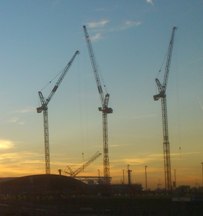
construction cranesMinisters and rail industry bosses frequently claim that Crossrail is being delivered ‘on time and on budget’, but is that really the case? A 2014 National Audit Office report suggests that, at best, these spokespeople may have been misinformed by their advisers.

The NAO analysis reveals that in 2009 ‘the anticipated cost of the programme had escalated to £17.8 billion’, taking the likely budget to about £19 billion once the rolling stock is included.

The report states that to reduce costs to an acceptable level, ‘the schedule for opening the railway has been extended’, with sponsors agreeing ‘to extend the timetable for full opening from May 2018 to December 2019’ (p. 22). Further economies were achieved by ‘simplifying integration works, re-sequencing work and reducing scope, saving £800 million’ (ibid.). In other words, the project seems to have been delayed and descoped and apparently will not be built to the specifications originally envisaged.

If an infrastructure project is already underway but heading over-budget, there are of course two main options to address this: increasing the budget by obtaining more money from funders, or building less infrastructure for the same money. In the case of Crossrail, the NAO analysis implies that if it had been built on time and to the original specification, the cost may have been approximately £20 billion (and it may have been far higher if the prolonged slump had not put downward pressure on construction rates).

It remains to be seen whether the scheme will actually meet the revised schedule and budget, since much of the construction work is yet to be completed. Whatever the outcome in five years’ time, claims that Crossrail is ‘on time and on budget’ risk misleading the public.

Is privatisation to blame for high rail fares?

IEA Blog, December 2014

Rail fares per passenger-kilometre are on average around 30 per cent higher in Britain than in comparable Western European countries. In addition, annual regulated fare increases exceeded the Retail Prices Index, an official measure of inflation, by 1 percentage point per year from 2004 to 2013. This is widely held to be a consequence of privatisation: the necessity for private rail firms to make a profit and pay dividends to shareholders meaning that fares must be substantially higher than otherwise would be the case. It is therefore argued that the rail industry should be reformed to help tackle the cost-of-living crisis and secure a ‘better deal’ for passengers.

In May 2014 more than 30 Labour parliamentary candidates called for train operations to be taken over by the government as current franchise agreements ended – a form of gradual renationalisation. Official Labour Party policy does not go quite so far, but would allow publicly owned train operators to compete with private firms. This approach could lead to creeping renationalisation given political influence over the franchising process. There are also calls to introduce a freeze on rail fares or at very least a ‘tougher cap’ on increases.

Proposals to address the cost-of-living crisis by increasing state involvement in rail are based on a series of misconceptions. Indeed, the heavy focus on fares suggests fundamental ignorance of the economic importance of rail to the UK economy. While the average household spends approximately £64 per week on transport, only about £3.30 is spent on train and tube fares. The impact of any fare reductions on the cost of living would thus be trivial. By contrast, policies that reduced motoring costs (c. £56 per week per household), such as cuts to fuel duty and car tax, would offer substantial relief to household budgets.

Another problem for the re-nationalisers is the relatively modest profit margins of the train operating companies, estimated at around 3 per cent of turnover. This implies that the ‘savings’ from no longer paying out dividends to shareholders would simply not be large enough to fund a significant reduction in fares. This conclusion also holds when other privately owned elements of the rail industry are considered.

Additional state intervention in the rail market would also be poorly targeted if poverty alleviation were the aim. On average rail travellers are far better off than the general population. Almost 60 per cent of spending on rail fares is undertaken by the richest 20 per cent of households, who also spend a higher proportion of their incomes on rail fares than poorer groups.

The skewed distribution of rail ridership towards high-income groups severely limits the potential for enhanced price controls to reduce the living costs of those on modest incomes. Indeed, for the population as a whole, more stringent fare regulation is fundamentally flawed as a cost-reducing measure, since what is saved in fares must be paid in additional taxes. Worse still, price controls reduce the efficiency of the rail network by artificially stimulating demand and increasing industry costs. Lack of price flexibility also makes it much harder to make better use of existing capacity. The resulting overcrowding creates political pressure for state spending on uneconomic new rail infrastructure, at additional expense to taxpayers.

Even if they were successful then, the proposals for additional state intervention to moderate rail fares would be ineffective at addressing cost-of-living issues, and in the case of further price controls entirely counterproductive. However, the proposed interventions would almost certainly fail to achieve even their stated objectives because they reflect a flawed analysis of the problems facing the sector.

There are several reasons for the high costs of the rail industry, but ‘privatisation’ per se is not one of them. Firstly, the effects of the history and geography of Britain’s railways should not be neglected. For example, the high share of rail travel involving trips to and from London – a vast and expensive global city – raises costs compared to other countries, even if other factors are held constant.

Secondly, it is misleading to refer to the reforms of the 1990s as ‘privatisation’ without understanding the extent to which the state continued to regulate, fund and direct the industry. Nominal ownership was indeed transferred to the private sector, but key decisions remained with the government. Opportunities for entrepreneurship, innovation and cost-cutting were heavily restricted by regulation. Unsurprisingly, major productivity gains were not forthcoming.

To make matters worse, policymakers imposed a complex, artificial structure on the industry. Contrary to evolved practices, the sector was fragmented, with separate firms managing the infrastructure, owning the rolling stock and operating the trains. These arrangements required armies of highly paid lawyers, consultants and bureaucrats, and also created numerous other inefficiencies.

Under a genuine privatisation model, there would have been strong incentives to reduce these additional costs, for example by moving back to a structure of vertical integration. However, traditional railway industry structures and full private ownership are effectively banned under European Union law. The proposals for part-renationalisation will not address the fundamental flaws in the structure of the rail industry that push up costs. EU ‘open access’ rules limit the options for more radical reform.

Renationalisation policies also risk further undermining the limited opportunities for entrepreneurship and innovation on the railways. The shortcomings of state-owned enterprises are well documented, and include poor cost control, lack of entrepreneurship, susceptibility to political interference and endemic misallocation of resources. In the longer term, these inefficiencies would tend to lower productivity on the railways, resulting in some combination of higher fares, higher subsidies or reduced quality of service. A range of new problems would be added to an already suboptimal industry structure.

Finally, the high cost of Britain’s railways to a large extent reflects wasteful investment in uneconomic new infrastructure. Since the mid-1990s it has been government policy to encourage modal shift from private road transport to public transport. This contrasts with the previous post-war emphasis on the managed decline of rail.

In this context, subsidies and other interventions have artificially inflated passenger numbers, creating a rationale for new capacity. Moreover, government funding helped create a powerful rail lobby with a strong financial interest in extracting additional resources from taxpayers.

Several large rail projects have been undertaken during the ‘privatisation’ era, including High Speed 1 (HS1), the West Coast Main Line upgrade, Thameslink and Crossrail. The cost of these five schemes alone is approximately £50 billion in 2014 prices. While taxpayers have paid the lion’s share of the bill, there has also been a significant impact on fares in some areas. For example, passengers in Kent have seen steep increases following the commencement of HS1 commuter services.

More generally, wasteful spending has contributed to concerns about the taxpayer funding such a high proportion of industry spending, strengthening the case for regulated fares to be raised above the official rate of inflation. Importantly, rail infrastructure projects have typically been heavily loss-making in commercial terms and poor value compared with road schemes. They would not have been undertaken by a genuinely private rail industry that was not reliant on state subsidy. Wasteful investment, and its impact on fares, is the direct result of government policy and should not be blamed on privatisation.

Clearly there are strong grounds for criticising the privatisation model imposed on the rail industry. The productivity gains associated with private enterprise were largely suffocated by heavy-handed regulation; a complex and fragmented structure pushed up costs; and huge sums have been wasted on uneconomic projects. In this context, it is unsurprising that fares have not fallen. However, it is also the case that these problems are symptoms of government intervention rather than the result of privatisation per se. Indeed they would not have occurred had the railways been privatised on a fully commercial basis under a ‘light-touch’ regulatory framework which allowed the organisation of the industry to evolve according to market conditions.


A longer version of this article was published in Smoking out red herrings: The cost of living debate.
Opportunity cost is the Achilles heel of High Speed 2

An economically rational transport investment policy would allocate scarce resources to those projects with the highest returns.

Yet even if one accepts the official estimates – and in reality there are major doubts as to whether the benefits will actually outweigh the costs – it is clear that High Speed 2 offers poor value for money compared with alternative transport schemes (data on rates of return on transport schemes here).

The issue of Opportunity Cost is therefore the Achilles Heel of HS2. Clearly the vast resources required would be far better deployed elsewhere.

If the aim is to cut journey times, then other schemes would deliver more valuable savings for less expenditure.

If the objective is to address overcrowding then there are far more cost-effective ways of increasing capacity and making more efficient use of existing links.

And if regeneration of the North is the priority, then greater gains would come from investing in local schemes that would deliver substantial agglomeration benefits.

In summary, High Speed 2 fails the test of economic logic. It is being driven by a mixture of politics and special-interest pressure rather than rational economic analysis.

HS2 a classic example of special interests capturing policy

An excerpt from the Treasury Select Committee session on the costs and benefits of HS2, held on 5 November 2013:


The railways are a classic example of a politically distorted market

In September 2012 I was invited to discuss rail policy with the Transport Select Committee. The session can be viewed here (@39 min). Some excerpts from the (uncorrected) transcript are provided below:

Chair: Do you support the Government’s overall strategy in HLOS [the government’s rail plan]? Have they got the right priorities?

Dr Wellings: I would say no. The Government has not dealt with the fundamental problem that the rail industry is hugely distorted by subsidies and other distortions such as the planning system. Basically, the central planners in the DfT are groping about in the dark. They don’t have an idea of genuine levels of demand or genuine prices because we also have price controls. Before embarking on these absolutely huge investments at taxpayers’ expense, they ought to get the fundamentals right and remove these distortions and, in particular, the subsidy regime.

Chair: What would you like to see change?

Dr Wellings: I would like to see the subsidies phased out and a change in the planning laws that force developers into corridors around railway stations, for example. There needs to be a change in the tax regime as well so that there is a level playing field with other transport modes.

Mr Leech: Dr Wellings, you argue that there is no economic case for the improvements because of the cost to the taxpayer. You suggest that taxpayers are already paying about £5 billion a year in subsidy. As far as you are concerned, that is an unacceptable level of subsidy. What would be an acceptable level of subsidy?

Dr Wellings: Zero. I would like to see it phased out over a period of, say, 10 years to zero.

Mr Leech: What impact do you think that would have on fare prices on trains and the number of passengers who could afford to use them?

Dr Wellings: It would vary. I don’t think it would have much impact on, say, the London commuter market, which I think is probably fundamentally economically viable, particularly if we also liberalise the planning system so that rail companies could make money from property development as they do in Japan. At the other extreme, you have railways in places like rural Wales that are very poorly used. I think they should definitely close down. There is no economic case whatsoever to keep them going and there is also no social case.

Mr Leech: On the basis that there is a subsidy taking people out of cars and reducing carbon emissions, in your studies what impact would there be on carbon emissions and on the cost to congestion as far as the economy is concerned? Have you done any of that work?

Dr Wellings: It is a myth about carbon emissions. If you closed the entire rail network down overnight, the impact on carbon emissions would be barely measurable. There are two reasons for that. One is that it is quite a small share of overall transport use. The second reason, of course, is that we are talking about a different market from cars. A high proportion of journeys are into central London, for example. These would probably hypothetically go on to coaches and buses, which are more efficient than trains. It would actually be barely measurable.

There is also the effect of subsidising people to move further and further away from where they work through cheaper train fares. You end up, for example, with long-distance commuters through the season ticket system. Although the rail journey might be relatively efficient from an environmental perspective, in terms of the whole lifestyle they probably emit more than if they lived in inner London or close to work.

Steve Baker: Dr Wellings, in your article for City AM in July you were highly critical of the Government. You said that “cynical political calculation seems to be the driving force of policy”. You talked about the railways as a classic example of a politically distorted market. You have also said, without reading the whole article, that many of the projects are motivated by politics rather than economics. Could you give us some examples of where these things can be seen?

Dr Wellings: Yes. The most telling example from the recent plans was the plan to electrify the branch lines in south Wales. Of course the Welsh railways already have perhaps the highest operating subsidies per passenger mile in the whole network. We already have a false market, a rigged market, and yet we are going to invest good money after bad in this already hugely subsidised market. It seemed that the Government was allocating new schemes across the country to pay off various special interests. Few of them made any economic sense. For example, if you wanted a fast train up to Sheffield, it can already be done by the East Coast Main Line in an hour and three quarters. There just isn’t the demand for that kind of service. The idea to spend this money electrifying the Midland Mainline to make some very tiny time savings didn’t make any business sense to me.

Of course the worst example of all is High Speed 2, which has a very low benefit-cost ratio. We saw road schemes being cancelled in the Comprehensive Spending Review that had a benefit-cost ratio over three times High Speed 2. There is no economic logic at all behind current transport policies.

Chair: We are on rail today, though.

Steve Baker: I would follow it up by asking this question. Isn’t it true that all Government investment decisions, including right across transport, are influenced by politics to some degree?

Dr Wellings: What we have is basically a thinly veiled version of Soviet-style central planning here. It is hugely centralised with the DfT and politicians making the big decisions. This is in a morass of economic distortions from price controls, subsidies and distortionary tax treatments as well. These people just can’t make sensible investment decisions because, first, it is hugely politicised, and, secondly, because we don’t have genuine prices or genuine levels of demand.

Tour de France road closures could be avoided

The Tour de France comes to Britain this weekend, starting in Yorkshire then moving down to Cambridge and London.

Cycling fans will enjoy the spectacle, but the race will also cause considerable disruption and inconvenience to travellers and residents. Some people could almost be trapped in their homes by the road closures (for example, those with mobility problems who rely on cars and buses).

For large numbers who do not enjoy cycle racing there will be significant costs but few if any benefits. Yet, it seems that no compensation will be paid to those negatively affected.

To add insult to injury, taxpayers are being forced to spend millions hosting the race. And worse still, the BBC and the cycling lobby are already exploiting it to promote ill-conceived and economically damaging transport policies.

Such sporting events are telling examples of the state throwing its weight around and disregarding the costs imposed on individuals and businesses. As long as governments control the roads, politicians and officials will continue to impose their transport diktats on the wider population.

By contrast, roads under voluntary ownership would face strong incentives not to allow such disruption. On commercially operated roads, closures could mean fewer customers and less revenue. The interests of users and owners would be closely aligned and there would be a clear trade-off against potential revenues from any special event.

On local roads controlled by residents and businesses, small communities could decide for themselves whether to allow organisers to use their infrastructure, subject to pre-existing contractual rules on denial of access.

The bogus capacity arguments for High Speed 2

The government recently pumped c. £10 billion of taxpayers’ money into the West Coast Main Line (WCML), delivering major improvements in journey times. It is therefore unsurprising that passenger numbers increased significantly in the period immediately following the upgrade.

However, it is far from certain that strong growth will continue in the longer term. For various reasons the UK economy is likely to perform relatively poorly. In addition, new technology may reduce the need for face-to-face meetings. Driverless cars could cut the costs of road travel. Strained public finances may increase the pressure to lower the level of rail subsidies and end the generous tax breaks given to wealthy long-distance commuters.

There is currently significant spare capacity on the WCML, but if this were no longer the case in the future, it would be far cheaper to make relatively minor adjustments to the existing route than build a brand new high-speed link.

The first step should be to phase out the subsidies and tax breaks that artificially inflate demand on the line. This should include handouts for heavily supported feeder services to the WCML, including local public transport. For example, state support currently covers approximately 40 per cent of heavy rail industry costs.

Price regulations and franchising arrangements should also be reformed so that train operators can make better use of existing capacity. More flexible pricing would flatten the peaks and reduce overcrowding, while combining franchises or greater vertical integration would reduce the duplication of underused services, thereby freeing up paths. Low-cost enhancements could then be deployed, such as lengthening trains and reducing the number of first-class carriages.

If there were a commercial case, relatively minor infrastructure investment, such as modernising signalling and re-engineering junctions, could deliver further capacity gains at a small fraction of the cost of HS2. The 51m group (pdf) has provided examples of how this could be achieved.

The potential for market mechanisms to resolve capacity problems can be illustrated with regard to rail freight (the above point about subsidies also applies). Under market conditions congestion would push up access charges on the route in question, thereby encouraging operators to more fully utilise train paths (for example with longer trains) or to divert traffic to alternative routes. For example, higher prices on the southern WCML might push intermodal freight onto the Ipswich-Nuneaton route. It might also affect the choice of port and inland terminal. At the margin, containers could shift from London Gateway to, say, Felixstowe, Immingham or Hull.

It should also be noted that rail freight traffic is fairly trivial in terms of the capacity of the road network. If a larger share of forecast intermodal growth shifted onto the roads, the effect would barely be discernible in most locations. Any impact could be mitigated by deregulation measures such as raising HGV speed limits on single carriageway roads and increasing maximum weights and lengths. There may also be a case for peak-time pricing at the worst bottlenecks, combined with an equivalent reduction in fuel duty, thus strengthening the incentives for hauliers to operate off-peak and making better use of existing road capacity.

HS2 regeneration claims are economic quackery

High Speed 2 is not the first transport project to have ambitious aims. Back in the 19th century the US government subsidised vast transcontinental railroads to bridge the east-west divide, rebalance the country’s economy and unify the nation.

But the situation on the ground presented challenges for this grand vision. Harsh conditions meant many construction workers fell ill or even died. This created a business opportunity. Entrepreneurs travelled to the railroads to sell ‘snake oil’ to the labourers. They claimed it would treat a whole range of conditions from infections to joint pain. The only problem was that it didn’t work. Customers were being misled.

HS2 is being sold as a modern-day elixir. At first it was promoted on the basis of faster journey times. Then it became an essential means to increase rail capacity. Politicians now argue the project will transform the North of England, bridge the North-South divide and turn northern cities into ‘world leaders’.

The scheme is therefore much more than a railway. It’s an economic cure-all that supposedly will rebalance the economy and create, depending on the lobby group, tens of thousands or hundreds of thousands of jobs.

It would be wonderful if HS2 really could make such an enormous impact. But in reality these assertions reflect a combination of blind faith and political spin. The economic evidence casts serious doubt on the ability of high-speed rail to deliver regeneration on a grand scale.

Take the example of East Kent. Back in the 1990s the government was pushing through the Channel Tunnel Rail Link, Britain’s first high-speed railway. The business case was very poor but regeneration claims were crucial in overcoming Treasury opposition. In particular, ministers said the line would transform the struggling old mining area along the Kent coast.

High Speed 1, as the line became known, did deliver impressive journey times. After fast services began in 2009, Central London could be reached in around an hour, compared with almost two hours previously.

Yet despite this major transport boost, East Kent is still economically depressed. Indeed in the period after the high-speed trains arrived, the region has performed worse on key economic indicators than the rest of Britain.

In the borough of Thanet, which includes Margate and Ramsgate, the employment rate has fallen to 61 per cent – 10 percentage points below the national average and similar to struggling old industrial cities like Liverpool. Median weekly pay for full-time workers is just £446, 14 per cent lower than the national figure.

East Kent has many advantages over the North of England. It’s just an hour’s drive from the M25 and close to prosperous areas in the South East. The Channel Tunnel gives the region easy access to the Continent and it is the closest part of the UK to Europe’s economic core. High-speed rail’s failure to transform the area augurs badly for the ability of HS2 to rejuvenate northern cities.

A second example is Doncaster. 125mph trains to London were introduced in the late 1970s, with electrification of the East Coast Main Line completed in 1991. The fastest trains to London take a little over 90 minutes to reach King’s Cross. Yet despite excellent transport links, Doncaster was ranked 42nd worst out of 318 boroughs in England in the 2010 Index of Deprivation. If the town itself were measured rather than the much wider area of the borough, it would be one of the very poorest places in the UK.

Big cities such as Leeds and Sheffield are of course different from smaller towns. High Speed 2 will make their journey times to London broadly similar to those enjoyed by the West Midlands today. Yet on most measures Birmingham performs far worse than Yorkshire’s major cities. Its employment rate is just 59 per cent, compared with 68 per cent in Leeds. Birmingham comes in the bottom ten districts in the Index of Deprivation.

Clearly improved rail links to London are no panacea. Other factors such as skills, education and entrepreneurship are more important determinants of economic success. But despite the evidence that HS2 won’t deliver the promised gains, it would be unfair to describe its promoters as snake oil salesmen.

For certain sectors and some localities there will indeed be benefits from the project, even if the enormous tax bill means they’re likely to be at the expense of other areas and the wider economy. However, assertions that high-speed rail will deliver a major transformation are far-fetched. HS2 is not an economic cure-all for the North of England and politicians that claim it is are indulging in economic quackery.

1st May 2014, Yorkshire Post (edited version)

Why are rail subsidies so high? The lessons from transaction cost economics

Richard Wellings on The Influence of Coase on Economic Policy – The Next 50 Years from Institute of Economic Affairs on Vimeo.