ECB money printing will prop up zombie banks
January 23, 2015
January 23, 2015
January 19, 2015
The recent Oxfam report on inequality and the ‘top 1 per cent’ is riddled with statistical errors. Worse still, its proposed solutions risk harming the poor through ill-conceived government interventions.
Nevertheless, current patterns of wealth distribution raise important questions about ‘crony capitalism’ and the extent to which concentrated special interests have succeeded in rigging markets to benefit themselves at the expense of the wider population.
As might be expected in ‘state-capitalist’ economies characterised by high public spending and pervasive regulation, it would appear that a significant proportion of the ‘top 1 percent’ do indeed owe a large part of their fortunes to special privileges granted by governments.
Several powerful ‘crony capitalist’/protected interest groups can be identified, including:
Some of the individuals and firms benefiting from special privileges could of course also thrive in an unhampered market economy based on voluntary exchange – but it seems likely that a high proportion of the above groups would either be eliminated entirely or see a major fall in their relative wealth in the absence of state protection.
The precise impact on overall inequality would depend on the social structures that evolved under a system based on free exchange. However, it is clear that both patterns of wealth distribution and absolute levels of wealth would be very different if markets were freed. Crony capitalism, special-interest influence and rent-seeking behaviour tend to undermine genuine wealth creation. Accordingly, the emergence of ‘distributional coalitions’ is a serious problem for contemporary ‘state capitalism’.
Tackling the cronies will not be easy, but identifying some of the most egregious special interests provides a useful starting point. A combination of honest, free-market money and deregulation would destroy the privileges of the financial sector. Dramatically shrinking public spending would undermine the government contractors. Scrapping patents would subvert that insidious form of protectionism. Planning liberalisation would reduce the advantages of crony-capitalist property developers. And land restitution (which raises many difficult issues) might start to address the widespread government-corporate theft of individual and communal property. Finally, abolishing occupational licensing would bring much-needed competition to state-protected professions.
Unless otherwise stated, all articles on this website are written in a personal capacity.
January 10, 2015 1 Comment
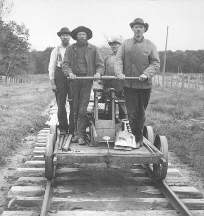 There are two main ways of dealing with cost overruns on big government projects without scrapping the scheme in question. The first is to ask the Treasury for more money – and this often works given the political embarrassment of half finished infrastructure.
The second method is ‘descoping’, which involves delivering less for the same budget. Examples include reducing the length of a route, making greater use of existing infrastructure, or lowering the quality of interconnections at stations. In recent years several schemes have been descoped to address rising budget estimates, including Crossrail, the Edinburgh tram and the planned high-speed line in California.
There is some tentative evidence that a similar approach has now been adopted for HS2, perhaps reflecting fears that further increases in the official budget would be politically disastrous at this stage of the project. (This may also explain why the budget is still quoted in 2011 prices in 2015). The HS1-HS2 link through Camden would appear to have been abandoned for the time being and there is now a major question mark over the £1 billion Warrington spur.
If the next government deployed economic logic it would scrap High Speed 2 entirely. However, the strength of the special interests backing HS2 raises the possibility of further descoping as a face-saving compromise.
Perhaps the least damaging ‘descoping’ option would be cancel current plans and speed up the existing West Coast main line instead, rebranding it as a high-speed route. One train operator has suggested London-Birmingham travel times could be cut to under one hour given improved signalling (and this would be to New Street, giving comparable overall travel times to HS2). At the same time various strategies could be undertaken to increase the capacity of the existing infrastructure (perhaps including the Chiltern Line to Birmingham).
Far less desirable, though still a big cost-saver and hugely preferable to current plans, would be to abandon Phase 2 entirely but keep elements of Phase 1. Now that Phase 1 is planned to reach Crewe, it could be argued by politicians that the line more or less reached the North of England. Northern cities could be bought off with (much cheaper) better links across the Pennines, together with improvements on the ECML.
Phase 1 could then be descoped by abandoning the Euston terminus and ending the line instead at Old Oak Common. This could reduce construction costs by roughly 25 per cent and would also undermine efforts by Transport for London and the Greater London Authority to ‘bully’ the Treasury into funding Crossrail 2 – now costed at an astounding £27 billion. Similarly the Birmingham spur could be scrapped with trains using existing tracks instead. Once again this could eliminate substantial ‘off balance sheet’ costs. Devious politicians might recycle some of these savings into longer tunnels in the Chilterns and better compensation to ‘buy-off’ opposition.
With the budget deficit stubbornly high and other spending priorities growing in political salience, cuts to the scope of HS2, and hopefully full cancellation, now seem increasingly likely. Observers should also watch out for hidden budget increases disguised by pushing elements of the project off-balance-sheet or delaying them until after the core scheme is completed.
December 18, 2014
 The recent announcement that the projected cost of Crossrail 2 has risen to £27 billion should be cause for deep concern within the Treasury. Added to High Speed 2 and High Speed 3, this means the total budget of just three planned or proposed rail schemes could be close to £100 billion – or perhaps even higher, given the overruns so typical of big government projects.
Economic conditions amplify the financial risks. The deficit remains stubbornly high, while robust medium-term growth cannot be guaranteed given the ongoing crisis in the euro zone and the fragile condition of the banking sector. This implies that a large proportion of future transport investment may be funded by government borrowing, adding a not insignificant amount to a national debt that has already reached £1.5 trillion.
There are clear echoes of Japan in the 1990s: a heavily-indebted government viewing transport investment as a way to stimulate growth after a deep recession.
To be fair, there is some merit in this argument. Improved transport links tend to raise productivity and boost growth by lowering the costs of trade. Greater specialisation and economies of scale are facilitated. Workers find it easier to access jobs that make good use of their skills and talents.
But transport spending also has major downsides. The additional tax burden needed to fund schemes directly, or repay debt incurred, suppresses economic activity. Incentives for work and entrepreneurship are diminished, while resources are misallocated due to the distorting effects of taxation. The overall cost to the economy is substantially higher than the direct tax bill.
The negative effects may be particularly severe if transport spending pushes levels of government borrowing into dangerous territory, such that market confidence is undermined. This risks a ‘debt spiral’, with a larger and larger share of tax revenues used to pay back investors in government bonds.
Heavily indebted governments should therefore exercise particular caution on transport investment. They must ensure that the economic benefits outweigh the full costs, taking proper account of the downside risks of budget overruns and the impact on public debt.
This didn’t happen in Japan. Vast sums were wasted on poor value schemes with low benefits – including the notorious ‘bridges to nowhere’. Government borrowing was pushed up, while taxpayers were also forced to pay ongoing maintenance and operating costs.
Unfortunately, a similar pattern is now emerging in the UK, as an ‘infrastructure craze’ grips our politicians. Rather than focusing on high-return, low-risk projects, the government is favouring low-return, high-risk schemes such as HS2. Once the negative effects on the wider economy of the additional taxation and borrowing are factored in, there is a significant chance that the costs of these projects will exceed their benefits.
The dangers are further exacerbated by rapidly changing technology. Developments such as advanced video-conferencing and driverless cars have the potential to completely transform transport markets by 2030. New technologies, for example in rail signalling or road pricing, also mean congestion and capacity problems can now be tackled at a tiny fraction of the cost of building brand new infrastructure.
Fortunately, there is still time for the UK to change course. One of the new government’s first priorities next year will be to instil confidence in its deficit reduction plan. Scrapping poor value transport projects would achieve this at minimal political cost.
City AM, December 2014
December 9, 2014
Taxpayers have far more reason to be angry about rail policy than passengers. They pay about £6 billion a year to support the railways, even though most of them rarely use trains. And it makes little economic or environmental sense to subsidise long-distance commuting, which encourages inefficient travel patterns and energy intensive lifestyles.
The argument for subsidies on grounds of fairness is also weak, as rail commuters are on average far richer than the general population. Measures that froze rail fares or limited increases to the Consumer Price Index would benefit this affluent minority at the expense of taxpayers and the wider economy.
Moreover, stricter price controls would exacerbate overcrowding problems, putting pressure on the government to fund hugely expensive infrastructure projects to increase capacity.
Regulating fares is therefore not a sensible way to cut travel costs. Instead the government should reverse current policy and give train operators more flexibility to vary fares to address congestion problems, for example by introducing ‘super-peak’ pricing and offering large discounts to passengers who avoid travelling at the very busiest times.
A shorter version of this letter was published in the London Evening Standard on 8 December 2014.
December 6, 2014
 Ministers and rail industry bosses frequently claim that Crossrail is being delivered ‘on time and on budget’, but is that really the case? A 2014 National Audit Office report suggests that, at best, these spokespeople may have been misinformed by their advisers.
The NAO analysis reveals that in 2009 ‘the anticipated cost of the programme had escalated to £17.8 billion’, taking the likely budget to about £19 billion once the rolling stock is included.
The report states that to reduce costs to an acceptable level, ‘the schedule for opening the railway has been extended’, with sponsors agreeing ‘to extend the timetable for full opening from May 2018 to December 2019’ (p. 22). Further economies were achieved by ‘simplifying integration works, re-sequencing work and reducing scope, saving £800 million’ (ibid.). In other words, the project seems to have been delayed and descoped and apparently will not be built to the specifications originally envisaged.
If an infrastructure project is already underway but heading over-budget, there are of course two main options to address this: increasing the budget by obtaining more money from funders, or building less infrastructure for the same money. In the case of Crossrail, the NAO analysis implies that if it had been built on time and to the original specification, the cost may have been approximately £20 billion (and it may have been far higher if the prolonged slump had not put downward pressure on construction rates).
It remains to be seen whether the scheme will actually meet the revised schedule and budget, since much of the construction work is yet to be completed. Whatever the outcome in five years’ time, claims that Crossrail is ‘on time and on budget’ risk misleading the public.
December 5, 2014
IEA Blog, December 2014
Rail fares per passenger-kilometre are on average around 30 per cent higher in Britain than in comparable Western European countries. In addition, annual regulated fare increases exceeded the Retail Prices Index, an official measure of inflation, by 1 percentage point per year from 2004 to 2013. This is widely held to be a consequence of privatisation: the necessity for private rail firms to make a profit and pay dividends to shareholders meaning that fares must be substantially higher than otherwise would be the case. It is therefore argued that the rail industry should be reformed to help tackle the cost-of-living crisis and secure a ‘better deal’ for passengers.
In May 2014 more than 30 Labour parliamentary candidates called for train operations to be taken over by the government as current franchise agreements ended – a form of gradual renationalisation. Official Labour Party policy does not go quite so far, but would allow publicly owned train operators to compete with private firms. This approach could lead to creeping renationalisation given political influence over the franchising process. There are also calls to introduce a freeze on rail fares or at very least a ‘tougher cap’ on increases.
Proposals to address the cost-of-living crisis by increasing state involvement in rail are based on a series of misconceptions. Indeed, the heavy focus on fares suggests fundamental ignorance of the economic importance of rail to the UK economy. While the average household spends approximately £64 per week on transport, only about £3.30 is spent on train and tube fares. The impact of any fare reductions on the cost of living would thus be trivial. By contrast, policies that reduced motoring costs (c. £56 per week per household), such as cuts to fuel duty and car tax, would offer substantial relief to household budgets.
Another problem for the re-nationalisers is the relatively modest profit margins of the train operating companies, estimated at around 3 per cent of turnover. This implies that the ‘savings’ from no longer paying out dividends to shareholders would simply not be large enough to fund a significant reduction in fares. This conclusion also holds when other privately owned elements of the rail industry are considered.
Additional state intervention in the rail market would also be poorly targeted if poverty alleviation were the aim. On average rail travellers are far better off than the general population. Almost 60 per cent of spending on rail fares is undertaken by the richest 20 per cent of households, who also spend a higher proportion of their incomes on rail fares than poorer groups.
The skewed distribution of rail ridership towards high-income groups severely limits the potential for enhanced price controls to reduce the living costs of those on modest incomes. Indeed, for the population as a whole, more stringent fare regulation is fundamentally flawed as a cost-reducing measure, since what is saved in fares must be paid in additional taxes. Worse still, price controls reduce the efficiency of the rail network by artificially stimulating demand and increasing industry costs. Lack of price flexibility also makes it much harder to make better use of existing capacity. The resulting overcrowding creates political pressure for state spending on uneconomic new rail infrastructure, at additional expense to taxpayers.
Even if they were successful then, the proposals for additional state intervention to moderate rail fares would be ineffective at addressing cost-of-living issues, and in the case of further price controls entirely counterproductive. However, the proposed interventions would almost certainly fail to achieve even their stated objectives because they reflect a flawed analysis of the problems facing the sector.
There are several reasons for the high costs of the rail industry, but ‘privatisation’ per se is not one of them. Firstly, the effects of the history and geography of Britain’s railways should not be neglected. For example, the high share of rail travel involving trips to and from London – a vast and expensive global city – raises costs compared to other countries, even if other factors are held constant.
Secondly, it is misleading to refer to the reforms of the 1990s as ‘privatisation’ without understanding the extent to which the state continued to regulate, fund and direct the industry. Nominal ownership was indeed transferred to the private sector, but key decisions remained with the government. Opportunities for entrepreneurship, innovation and cost-cutting were heavily restricted by regulation. Unsurprisingly, major productivity gains were not forthcoming.
To make matters worse, policymakers imposed a complex, artificial structure on the industry. Contrary to evolved practices, the sector was fragmented, with separate firms managing the infrastructure, owning the rolling stock and operating the trains. These arrangements required armies of highly paid lawyers, consultants and bureaucrats, and also created numerous other inefficiencies.
Under a genuine privatisation model, there would have been strong incentives to reduce these additional costs, for example by moving back to a structure of vertical integration. However, traditional railway industry structures and full private ownership are effectively banned under European Union law. The proposals for part-renationalisation will not address the fundamental flaws in the structure of the rail industry that push up costs. EU ‘open access’ rules limit the options for more radical reform.
Renationalisation policies also risk further undermining the limited opportunities for entrepreneurship and innovation on the railways. The shortcomings of state-owned enterprises are well documented, and include poor cost control, lack of entrepreneurship, susceptibility to political interference and endemic misallocation of resources. In the longer term, these inefficiencies would tend to lower productivity on the railways, resulting in some combination of higher fares, higher subsidies or reduced quality of service. A range of new problems would be added to an already suboptimal industry structure.
Finally, the high cost of Britain’s railways to a large extent reflects wasteful investment in uneconomic new infrastructure. Since the mid-1990s it has been government policy to encourage modal shift from private road transport to public transport. This contrasts with the previous post-war emphasis on the managed decline of rail.
In this context, subsidies and other interventions have artificially inflated passenger numbers, creating a rationale for new capacity. Moreover, government funding helped create a powerful rail lobby with a strong financial interest in extracting additional resources from taxpayers.
Several large rail projects have been undertaken during the ‘privatisation’ era, including High Speed 1 (HS1), the West Coast Main Line upgrade, Thameslink and Crossrail. The cost of these five schemes alone is approximately £50 billion in 2014 prices. While taxpayers have paid the lion’s share of the bill, there has also been a significant impact on fares in some areas. For example, passengers in Kent have seen steep increases following the commencement of HS1 commuter services.
More generally, wasteful spending has contributed to concerns about the taxpayer funding such a high proportion of industry spending, strengthening the case for regulated fares to be raised above the official rate of inflation. Importantly, rail infrastructure projects have typically been heavily loss-making in commercial terms and poor value compared with road schemes. They would not have been undertaken by a genuinely private rail industry that was not reliant on state subsidy. Wasteful investment, and its impact on fares, is the direct result of government policy and should not be blamed on privatisation.
Clearly there are strong grounds for criticising the privatisation model imposed on the rail industry. The productivity gains associated with private enterprise were largely suffocated by heavy-handed regulation; a complex and fragmented structure pushed up costs; and huge sums have been wasted on uneconomic projects. In this context, it is unsurprising that fares have not fallen. However, it is also the case that these problems are symptoms of government intervention rather than the result of privatisation per se. Indeed they would not have occurred had the railways been privatised on a fully commercial basis under a ‘light-touch’ regulatory framework which allowed the organisation of the industry to evolve according to market conditions.
A longer version of this article was published in Smoking out red herrings: The cost of living debate.
November 30, 2014 1 Comment
 Libertarians should not put much faith in the extension of ‘pseudo-markets’ as a means of rolling back government. A more radical strategy is needed.
The pseudo-markets approach involves setting up some kind of market-like structure in a largely government controlled sector. A typical example is education vouchers. Parents receive state-funded vouchers, which they then use to ‘purchase’ education for their children. To the extent such systems facilitate choice, competition and entrepreneurship they may provide benefits for participants. But there are also significant downsides. Pseudo-market structures are often afflicted by high transaction costs (partly because parasitic special interests benefit from artificial complexity). And since state funding is retained, the misallocation of resources remains entrenched and pervasive. Using education once again as an example, this could mean that government would carry on funding the teaching of those children who were gaining little from formal education, or indeed losing out due to the opportunity costs.
Moreover, with government funding comes government control. Under any plausible voucher system, only education providers that met certain politically determined criteria would qualify for state funding. In practice this would mean official control over the curriculum and other key elements such as admission rules. Even if a more flexible system were introduced initially, it would only take a few scandals – renegade schools adopting practices that were deemed unacceptable – for stricter eligibility controls to be instituted.
Another highly regrettable aspect of pseudo-markets is their creation of ‘distributional coalitions’ of groups that depend on government subsidies and regulatory privileges. Given strong financial incentives, private firms providing voucher-funded schooling would likely be far more effective at rent-seeking than the moribund government institutions they replaced. Similar examples abound, from the US ‘prison-industrial complex’ to Britain’s ‘privatised’ rail industry. Indeed rent-seeking activities may actually lead to an expansion in government support, with even more resources appropriated through taxation.
These state-dependent special interests would also have strong incentives to capture the regulatory framework in order to shut out competition and increase their returns. Thus large education firms would inevitably lobby for government protection in the form of stricter licensing of providers. They could also successfully promote expanded services to politicians, as a means of achieving various social objectives. Similarly, potential investors such as state-privileged pension funds favour rigged markets in order to reduce risk and guarantee returns. And parent-voters are likely to resist any attempt to reduce the value of handouts such as education vouchers, particularly given the skewed distribution of the tax burden. Indeed, the relative transparency of vouchers etc. compared with more opaque intra-state funding mechanisms would arguably make it even harder to reduce government spending. It is easy to see how the introduction of pseudo-markets in so-called public services can degenerate into yet another shakedown by special interests.
If pseudo-markets risk being counterproductive in terms of rolling back the state, they do at least provide lessons for the development of more effective strategies. Incentive structures would appear to be a key consideration. Clearly the retention of an element of state funding encourages rent-seeking behaviour that undermines attempts to reduce government involvement. This suggests that instead of attempting to reform ‘public services’, libertarians should focus their efforts on approaches that reject them completely. Accordingly, activists should develop strategies that first bypass and later supplant state institutions entirely.
Samuel Edward Konkin argued that a libertarian society could be achieved through the extension of the counter-economy – non-legal shadow markets that, due to their voluntary nature and greater efficiency, would eventually displace governments. The plausibility of such an outcome may be questioned in the context of modern surveillance states. Nevertheless, a less ambitious ‘quasi-agorist’ or ‘neo-agorist’ approach that sought to extend non-state networks could indeed be an effective strategy for undermining dependence on and support for government services.
Konkin was also highly sceptical about the efficacy of libertarian participation in politics. Yet, to the extent that libertarians do have political influence, it should perhaps be targeted towards removing those regulatory barriers that prevent individuals, families and communities from bypassing state institutions. Looking at education once again, this might for example involve campaigning for the removal of legislation that prevents homeschooling, requires the licensing of non-state schools or mandates education up to a certain age. Many such rules are relatively obscure and have little political salience, suggesting that in some instances concentrated pressure would result in reform.
Of course in some places, such as the UK and in many US states, there are relatively few barriers to methods of opting out such as homeschooling. Effective strategies may then revolve around raising awareness of these possibilities through the dissemination of information and practical methods of implementation. Ivan Illich, for example, advocated the development of ‘learning webs’ which would allow children outside formal state schooling to access appropriate expertise and learning materials. Indeed, contemporary homeschooling networks pool skills and materials to enrich children’s education and capture economies of scale.
Such non-state networks are clearly far superior to pseudo-markets in terms of preserving and extending liberty: Provision is voluntary and does not depend on theft of resources; incentives for rent-seeking are absent because there are no government officials to lobby for funding/special privileges; top-down politicisation and social engineering is extremely difficult to impose on such decentralised structures; and allocative efficiency is likely to be much higher than under state systems, because the investors in education (i.e. parents, extended families and small community groups) possess local, time and place specific knowledge (e.g. the talents of a particular child and local employment opportunities), as well as having strong incentives to control costs.
Libertarian objectives are also enhanced by the wider effects of extending non-state networks. Reduced dependence on government handouts is likely to undermine political support for predatory politics and the funding of ‘public services’. At the same time, non-state networks that develop in a particular sector can extend into other activities. For example, connections that develop through a homeschooling network can form the basis of counter-economic activities and the voluntary exchange of goods and services outside government regulatory frameworks. Networks could also develop around subcultures that resisted governments on ideological grounds, effectively becoming refuges for political dissidents (e.g. by facilitating escape to a safe location). Thus a strategy of exiting ‘public services’ and developing voluntary alternatives has the potential to snowball into the creation of resilient sanctuaries from the state offering protection from government aggression. The contrast with counterproductive pseudo-markets is stark.
Unless otherwise stated, all articles on this website are written in a personal capacity.
November 22, 2014 1 Comment
 ‘African leaders like to settle nomads. Nomads make it hard to build a modern state, and even harder to build a socialist state. Nomads can’t be taxed, they can’t be drafted, and they can’t be controlled. They also can’t be used to attract foreign aid, unless you can get them to stay in one place.’
Michael Maren, USAID (quoted by Murray Rothbard)
When assessing the effect of their activities, libertarians tend to focus on the West. It is difficult to argue that libertarians have been successful at rolling back Western states. Government remains pervasive and much of the nominally private sector now depends on state-granted privileges. But, more positively, the recent explosion of interest in libertarian ideas, together with the growth of the libertarian youth movement, are grounds for optimism that active opposition to big government will increase in the future.
Looking outside the West, the picture is also mixed. There is little evidence of a genuine libertarian movement of any size, but in many regions political elites have at least adopted models of state capitalism that allow some space for individual ownership and entrepreneurship. Government is still extensive, but the state has arguably retreated somewhat since the height of the communist era, and libertarian-influenced ideas in economics may have played a part in this.
Yet there has been another far more negative development that barely registers in debates over libertarian strategy. This is the ongoing assault on the world’s stateless societies – and in many cases their destruction. The history of this process is of course very long, and includes the conquest of what is now the United States. It continues today in aggressions across the world, actions that in many cases long pre-date the War on Terror.
But the attack on stateless societies is not just being conducted through war and conquest. A more insidious process is underway throughout much of the world. This involves government officials counting and registering individuals in de facto stateless areas and forcing or bribing them onto biometric identity registers (sometimes with compulsory ID cards). The state often gives itself formal title to their land (which may then be sold by corrupt officials to palm oil producers, timber firms, or mining companies), while various subsidised programmes undermine state-free lifestyles through the provision of aid. Traditional means of subsidence that are independent of government are destroyed through the appropriation of land and resources, breeding state dependency and killing off local cultural practices. This is the typical pattern from the forest peoples of India to the tribes of Papua New Guinea. Needless to say, the crackdown on stateless societies, including biometric ID programmes, is to a large extent funded by Western foreign aid.
So, why should libertarians be worried about the assault on stateless societies? Perhaps the main reason is the importance of these and other sanctuaries from the state in acting as a check on government tyranny. Individuals and groups may wish to exit in order to preserve their traditional religious and cultural practices, or to avoid losing their freedom in other ways such as slavery (either directly or indirectly via punitive taxation and other takings). In The Art of Not Being Governed, James C. Scott describes some of the strategies used by stateless peoples in SE Asia to avoid the various predations of nearby states. The existence of ungoverned territory was absolutely crucial to their success.
Stateless zones also offer the possibility of exit for political dissidents. For example, de facto stateless regions of central Asia provided refuge for opponents of the kleptocracies of the Persian Gulf. Without such sanctuary they faced kidnap, torture, extended imprisonment and execution as a result of their views. (Whether or not one finds the opinions of such individuals objectionable is beside the point.) Transnational institutions, international arrest warrants and extradition treaties arguably increase the importance of such refuges.
The exit option has the further benefit of acting as a restraint on the behaviour of states themselves. If political elites steal too much they risk generating a vicious circle as their subjects decide to leave and the returns from taxation and/or serfdom decline. Indeed, it is often the most entrepreneurial and talented who have the strongest incentives to move out. While attempts may be made to prevent exit, these also raise the costs of predation. Thus the presence of sanctuaries from the state will tend to reduce the extent of government in other areas by acting as a check on states’ ability to seize resources.
Ungoverned territories also serve as bases for counter-economic enterprises that circumvent the prohibitions on trade imposed by governments. For example, the Darien Gap and the western fringes of the Amazon rainforest play key roles in the cocaine trade; North-West Pakistan and Afghanistan in hashish and heroin. Whatever the pros and the cons of such activities, these sanctuaries help ensure freedom to choose rests with the individual rather than the state.
Finally, it is worth remembering that the ongoing aggression against stateless societies is very costly in itself, inflicting violence and suffering in the targeted regions, while at the same time requiring large increases to the tax burden and government debt in the West and the misallocation of economic resources on a grand scale. The negative impact of overseas conflicts on domestic liberties is also well established.
But what of the argument that stateless societies are very far from free, that they are frequently characterised by cultural practices that severely restrict the liberty of women and other groups? While traditions vary enormously, and some do indeed seem abhorrent according to Western mores, groups within stateless societies typically do not have the capacity to aggress against individuals on anything like the same scale as states. One should also take into account levels of development and the logistics of surviving in the often very harsh and sparsely populated mountain/desert/jungle environments where stateless arrangements still exist. Even if desirable in principle, imported ideas such as ‘liberal democracy’ may be difficult or impossible to introduce under such conditions.
It is also incorrect to assume that economic development is impossible in stateless societies. This misconception partly results from the difficulty of measuring and incorporating their economic activity in standard GDP statistics. Trade with surrounding areas means such zones – when unmolested – have typically enjoyed significant improvements in living standards. Indeed this even appears to have been the case in the recent period of ‘anarchy’ in Somalia, despite the endless interference of outside powers.
Western politicians wishing to ‘free’ stateless societies should first explain how they would do so without violating the non-aggression principle. Would they use force to change cultural practices they abhorred? Would they appropriate resources from individuals in the West to fund their mission? And could they be sure their intervention would be successful and not counterproductive? For example, might it make target groups even more hostile to interactions with outsiders and their ideas, or alternatively incentivise them to become dependent on foreign aid handouts? The record of such initiatives does not augur well.
In conclusion, stateless societies still have a valuable role to play in the preservation and expansion of liberty. They comprise an important sanctuary from government and may bolster other sanctuaries within state-governed territories, including the counter-economy and various sub-cultures. In terms of libertarian goals, exit strategies that build up such pockets of resistance may well prove more effective in extending liberty than attempts to roll back the state through politics. This also implies that to the extent libertarians do have political influence a focus on opposing the assault on enclaves of statelessness would pay large dividends (for example, criticism of policies such as foreign aid and military intervention).
Those who hope liberty will be delivered by extending international institutions are surely terminally naive, as well as inconsistent (what about the force required to impose such a framework on the unwilling?). Such governance structures will inevitably be captured by special interests and, as with any major concentration of political power, there is a significant risk tyranny will follow. At that point, defenders of liberty will need an escape route. The importance of competition and the possibility of exit cannot be overstated.
This essay is based on the first part of a presentation on ‘Rothbard versus Konkin on Libertarian Strategy’ given to the Libertarian Alliance in October 2013.
Unless otherwise stated, all articles on this website are written in a personal capacity.
November 16, 2014
 It is difficult to think of anything more hypocritical than libertarian groups taking state money. But worryingly the vast majority of organisations in continental Europe that style themselves as ‘free-market’, ‘libertarian’ and ‘classical liberal’ are funded with money appropriated from taxpayers. And given that libertarians in the US and UK spend a great deal of time arguing against foreign aid, it is rather ironic, to say the least, that many of these groups have been willing recipients of aid money from the US, EU and other governments.
This is not just a matter of principle. The government money has typically been tied to particular research projects and events programmes. These have promoted policy agendas that a high proportion of libertarians would find deeply objectionable and that bear little relation to genuine free markets.
Unsurprisingly there is a close correlation between such output and key priorities of the European Commission and US economic/foreign policy. Thus one observes a plethora of reports and events on deepening European integration and harmonisation; on strengthening the protection of ‘intellectual property rights’ – a particular focus of US lobbying; on cracking down on the informal economy (Konkin must be turning in his grave); on introducing pseudo-markets, coercive welfare systems and sham privatisations; and on entrenching the special privileges of large corporations through rigged-trade agreements such as TTIP.
Needless to say, senior figures at these organisations have frequently been prominent apologists for US foreign policy, even if this has meant completely betraying basic libertarian principles. Many of these state-funded bodies have also enjoyed an unhealthily close relationship with political elites, particularly in some of the smaller central and eastern European countries. Staff have often gone on to assume senior positions within governments, while some organisations have engaged in detailed policy engineering in cooperation with state bureaucracies.
Such politicisation is tempting – concrete examples of political influence make it easier to attract donations from special interests. But it’s also very dangerous. It increases the temptation to sell-out on principle and distorts research priorities towards those areas most helpful to political elites, while deterring organisations from criticising their political patrons. Worse still, it can do serious long-term damage to the libertarian/free-market movement when initially sensible policies are captured, distorted and rendered dysfunctional by state agencies, politicians and vested interests. Take the numerous botched privatisation programmes that resulted in crony capitalism and/or inefficient rigged markets. Fed through the government grinder, they have brought immense discredit on libertarian ideas.
This is not to say that the overall impact of these government-funded groups has necessarily been negative. Often they have been effective at raising awareness of the dangers of heavy taxation and high inflation, for example. Their agenda may well be preferable to many of the other statist traditions in the region. Perhaps the main objection is therefore their use of terminology – how they describe themselves as libertarian and free-market, pepper their literature with the words ‘freedom’ and ‘liberty’, when in reality they are promoting a particular model of state-capitalism that largely serves certain special interests in the West. And given their prominence, there must be a danger that potential libertarians in Europe will be led astray. Students may not realise that the ‘libertarian’ events they attend or websites they visit are funded by the EU, German government or USAID, and accordingly promote worldviews that differ markedly from genuine libertarianism.
Finally, it should be noted that it is unlikely to be in these organisations’ own interest to continue taking government money. Their dependence on state funds undermines their credibility, not only with the wider libertarian/free-market movement, but also among ‘opinion formers’ in their own countries. At worst, they risk being viewed as sock puppets for the US and EU, particularly as the rise of the internet and social networking makes it increasingly difficult for them to keep their state-funding secret.
These groups have important lessons to learn from organisations that have enjoyed sustained, long-term success in the US and the UK: don’t take government money, stick to your principles, and keep politicians at arm’s length.
Unless otherwise stated, all articles on this website are written in a personal capacity.
 Richard Wellings