High Speed 1: how taxpayers were taken for a ride

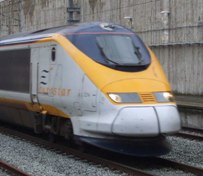
Eurostar 203High Speed 1 (HS1) would never have been built if the decision had been made on commercial criteria, or indeed on rational economic grounds. While the high-speed-rail lobby promotes the scheme as a success story, it was in fact a financial failure, marked by cost increases, repeated bailouts, disappointing passenger numbers and failed objectives.

The cost of the final HS1 scheme was far in excess of original estimates. In November 1985, British Rail’s preferred high-speed option was costed at about £1 billion in 2015 prices, while the final cost of the project has been estimated at approximately £11 billion in current prices.

Moreover, after the line opened below-forecast passenger numbers meant that the operator, Eurostar, had to be bailed out by the Department for Transport. Further government support for the struggling route was obtained via the access charges for (subsidised) Kent commuter services.

In addition to substantial operating subsidies, HS1 appears to have been artificially supported by the manipulation of the rail market. Some services from Kent stations to convenient London termini such as London Bridge, Cannon Street, Charing Cross and Victoria have been cut, while others have been slowed down, in an apparent attempt to drive passengers onto HS1. Commuters across the Southeastern franchise area also faced steep increases in fares to pay towards the high-speed services, whether they used them or not.

Many of the objectives of HS1 have also yet to be achieved. Plans to run international services from Stratford in London and through services to the Midlands and the North did not materialise due to low demand. At the time of writing, Eurostar trains do not stop at the £250 million Stratford International station. And notwithstanding exceptional traffic during the 2012 Olympics, it appears that the stop is only lightly used by commuters from Kent, often handling fewer than 1,000 passengers per day in each direction.

HS1 also provided a rationale for the construction of additional transport infrastructure at further expense to the taxpayer. A £250 million (2015 prices) extension to the Docklands Light Railway (DLR) was constructed largely to improve the accessibility of Stratford International. The line also provided a major justification for the redevelopment of Kings Cross St Pancras Underground station, at an additional cost of roughly £1 billion (2015 prices).

It should also be noted that much of the ‘regeneration’ along the route has been state-funded. The subsidised public sector and ‘crony capitalists’ dependent on government privileges dominate the post-Olympics redevelopment at Stratford. Major tenants will include the bloated bureaucracies of Transport for London and the Financial Conduct Authority.

Similarly, the government has sought to kick-start the stalled redevelopment of Ebbsfleet – a highly undesirable site, much of which is at risk of flooding – with the injection of at least £200 million of public funds.

The development of land near Kings Cross – also partly government funded – could well have been viable without the link, given the artificial scarcity of opportunities produced by strict planning controls in Central London. Indeed, the redevelopment of such areas may be delayed by the uncertainty and planning blight associated with major transport schemes.

Even if one makes highly optimistic (and questionable) assumptions about the wider economic gains from HS1, it is clear that the project represented very poor value for money compared with alternative investments in transport infrastructure. Indeed, when the deadweight losses from the tax bill and off-balance-sheet spending are included, it seems likely that the costs of the scheme have outweighed the benefits.


This analysis of High Speed 1 is partly based on research published in The High-Speed Gravy Train: Special Interests, Transport Policy and Government Spending.

Eurostar sale backed by government subsidies

The sale of Eurostar is a terrible deal for the taxpayer. It is only possible because the government subsidises loss-making high-speed commuter services to Kent and this funding now pays a high proportion of the infrastructure costs of High Speed 1. According to a 2012 National Audit Office analysis:

‘Under the new track access charging regime, access charges paid by Eurostar were reduced to the levels being paid by the domestic operator. A greater proportion of overall charges (60 per cent of HS1 Limited’s forecast access charge income over the 30-year concession) is now paid by the domestic operator because it uses more of the capacity of the line. To support domestic high speed services, the Department pays additional subsidy to the domestic train operating company. The Department forecasts that additional subsidy payments will amount to almost £110 million in 2011-12. If this level of subsidy in 2010 prices was to continue until the end of the concession in 2040, we estimate that the present value of subsidy payments will be some £2,100 million but the actual level will depend on the outcome of future franchise negotiations.’

The NAO report also reveals that five years ago, taxpayers also spent around £800 million (in current prices) bailing out Eurostar and its parent company. The massive losses accrued since the service started in 1994 were effectively written off. Passenger numbers have been over 60 per cent lower than originally forecast when the line was approved.

It seems highly unlikely that Eurostar would have been commercially viable without these bailouts and hidden subsidies. Indeed, the sale may be viewed as a form of government borrowing in the sense that it relies on ongoing taxpayer support for the route over the long term. The receipts are of course miniscule compared with the estimated £11 billion total cost (in 2015 prices) of High Speed 1.


An earlier version of this article appeared in City AM.

Time to pull the plug on Eurostar?

The dismal economic returns on the Channel Tunnel Rail Link are a stark warning to supporters of a high-speed line to Scotland and the North of England.

The total cost of the link, now renamed “High Speed One” (HS1), is close to £10 billion in today’s money, when all the hidden subsidies and extras are included. And this figure does not include the substantial “deadweight” losses from the additional taxation required to fund the line. A commercial business would expect to make an annual return well above £500 million on such an investment, particularly since railways typically need to be substantially rebuilt after 30 or 40 years.

In this context, the return on HS1 is pitiful. Last year, the “investment recovery charge” levied on Eurostar was reduced by more than half to about £2,200 for each train service using the route. By my calculation, this adds up at most to about £40 million a year – a return of less than half of one per cent on the government’s original investment.

But even this return is questionable. Eurostar has made large losses during its sixteen year history and it remains to be seen whether the hidden subsidy of cut-price access charges will enable it to make sustained profits in the medium term. In other words, not just the infrastructure but the service itself has been heavily subsidised by taxpayers, meaning the overall economic return on HS1 has almost certainly been negative – even before inflation is taken into account. The local “Javelin” services to North Kent now using the line are also subsidised.

Of course, advocates of high speed lines may point to “wider benefits” such as regeneration. Indeed, the expensive re-routing of the Channel Tunnel link through East London was supposed to boost the area’s economy (as well as to facilitate currently non-existent through trains to the North of England). However, state-funded regeneration tends to be a negative sum game. Resources are inefficiently transferred from some areas to others, while social problems are displaced rather than reduced. Moreover, if nebulous “wider benefits” arguments were used consistently as a rationale for taxpayer support, just about every business activity would be entitled to subsidies and almost the entire economy would become socialised.

After sixteen years of support, the government should stop subsidising train services to the continent. Taxpayers could receive at least some compensation if the high-speed line were sold off to the highest bidder with the proceeds used for tax cuts and (unlike in current proposals for its “privatisation”) no restrictions imposed on how the route is used. Perhaps an unsubsidised international service could just about cover maintenance costs, with the sunk capital effectively written off. But far better returns could almost certainly be achieved by shutting down the line and disposing of the assets – which include substantial plots of land, tunnels under London and the Thames, and large amounts of scrap metal.

22 July 2010, IEA Blog