The future of the railways

This debate marked the launch of my new paper on rail privatisation, Without Delay: Getting Britain’s Railways Moving. The study is heavily critical of the 1990s privatisation model, in which politicians and officials imposed a complex and fragmented structure on the industry, ignoring the lessons of both transaction cost economics and railway history.

Ten rail capacity solutions that don’t cost the earth

  • Introduce more flexible pricing to flatten the peak. Passengers would have greater financial incentives to travel during the ‘shoulders’ of the peak, or indeed off-peak, thereby making more efficient use of existing infrastructure and rolling stock.
  • Phase out government subsidies and price controls so that fare levels better reflect industry costs.
  • Convert first class carriages into standard class carriages to accommodate more passengers.
  • Introduce high-capacity ‘economy class’ coaches with more standing room instead of seating (offering lower fare options).
  • Lengthen trains by adding more carriages and extending platforms. Double-length trains could even be used on busier sections and then split part-way through the journey.
  • Deploy improved signalling technology etc. to reduce the necessary gap between trains.
  • Consider using double-decker trains where the engineering costs would not be prohibitive.
  • Address bottlenecks by re-engineering junctions: relatively expensive but still much cheaper than building brand-new infrastructure.
  • Divert freight onto quieter routes, enhancing loading gauges where necessary. For example, intermodal traffic from Felixstowe to the Midlands and North can be sent via the Ipswich-Nuneaton route rather than the southern West Coast Main Line.
  • Allow full vertical integration to end the artificial separation between track and train, and between different franchisees and open-access operators. This would improve the financial incentives to make more efficient use of spare capacity.

HS2: subsidies breeding more subsidies

The rail industry depends on a very high level of state support. Much of the sector would not be viable without vast taxpayer subsidies and other special privileges.

The government supports the railways in several ways, including:

  • Providing direct subsidies from the taxpayer of about £6 billion a year (not including London Underground or light rail). This is equivalent to approximately 70% of fare revenue and represents a major distortion of the transport market.
  • Guaranteeing Network Rail debt, which has now reached an astounding £38 billion, larger than the national debt of Nigeria, a country of 180 million people. Big increases in such borrowing have enabled the government to hide the true level of taxpayer support by passing some of the costs on to future generations.
  • Imposing price controls on many rail fares, thereby increasing overcrowding, particularly on peak-time commuter services into London from satellite towns such as Milton Keynes.
  • Exempting rail fares from VAT. By contrast, tax is charged on road fuel at a rate of approximately 150%.
  • Adopting planning policies that push new development into areas adjacent to railway stations (for example, Stratford City), while restricting more spatially dispersed car-friendly growth. Also locating large public sector employers around rail hubs, including much of the civil service.
  • Funding ‘business’ rail travel by public sector workers and government contractors.
  • Suppressing competing modes such as road and air transport through high taxes, heavy regulation and restrictions on new capacity.

The artificial nature of the rail market raises uncomfortable questions for advocates of new rail infrastructure such as High Speed 2. Massive taxpayer support, regulated fares, discriminatory tax treatment and distortionary planning policies mean that the case for HS2 is grounded on levels of demand that have been hugely inflated by state intervention.

Existing subsidies are breeding future subsidies, with the UK’s transport sector and economic geography becoming ever more maladapted and distorted in the process.

Flaws in the ‘Northern Powerhouse’

Derelict factory 156There have been various attempts to regenerate the cities of the North over the last fifty years or so. All have failed to transform the region. As a Policy Exchange study put it, ‘attempts to regenerate British cities over the past ten, twenty or even fifty years have failed. The gap between struggling and average cities, let alone between struggling and affluent cities, has continued to grow. Geographical inequality is growing’. Once-thriving northern cities are now heavily dependent on central government subsidies. The ratio of public spending to ‘gross value added’ is around 50 per cent higher in the North of England than in London and the South East.

The cost of failed regeneration efforts has also been substantial. Stronger regions have been weakened due to the additional tax burden imposed on them to pay for such initiatives. And weaker areas have become trapped in state dependency, with high levels of government expenditure and national pay rates crowding out the private sector – for example by absorbing skilled labour – thereby hindering entrepreneurship and the production of wealth.

There is also a heavy indirect cost from distorting the UK’s economic geography and leaving it maladapted to current conditions. Essentially government policy has attempted to fossilise patterns of development that grew up in the Industrial Revolution, even though many of the reasons for economic activity concentrating in northern cities have long since disappeared. The result is that capital and labour have been misallocated to suboptimal locations. For example, subsidies to the North have reduced the incentive for people to seek more productive employment in other parts of the UK, once again harming the stronger regions and the economy as a whole.

In this context, this government’s plan to re-invent regional policy through the concept of a Northern Powerhouse would appear to be ill-conceived. As with previous attempts at regeneration, the plan is built on vast taxpayer subsidies from central government, imposing significant costs on the wider economy. And rather than allowing patterns of economic activity to evolve through voluntary exchange, this represents a top-down attempt to push development into favoured locations. Unfortunately there is a high probability that politicians will once again end up ‘picking losers’ rather than winners, and that the policy will squander resources on areas whose deep-seated problems will not be solved by yet more state intervention.

A key component of the Northern Powerhouse plan is the idea that by improving transport links between major centres such as Leeds, Manchester and Sheffield, the North can benefit from the kind of ‘agglomeration economies’ enjoyed by London. In other words, the hope is that better transport links will enable the region to behave more like a single city, with, for example, residents of Leeds and Sheffield easily able to work in Manchester and so on. The government hopes to achieve this by building High Speed 3, a multi-billion-pound, trans-Pennine rail link that will cut journey times between the city centres of Manchester, Leeds and Sheffield to around half an hour.

There are indeed substantial economic benefits from such clusters of economic activity. For example, thicker labour markets may lead to the better matching of workers to jobs and increased firm density may lead to greater knowledge sharing and to increased specialisation in supply chains.

However, it is also clear that current government plans will fail to produce most of these benefits. The population of the north is far more dispersed than that of Greater London, with many of its conurbations fragmented into smaller centres and a high degree of suburbanisation. This means that high-speed rail links between the major city centres will not deliver fast enough door-to-door travel times to enable the region to function as a single economic unit. Typical commutes will remain too time-consuming and too expensive for the labour markets to combine.

To give a practical example, take someone who lives in the wealthy suburbs of north Leeds and works in Manchester. The bus trip to Leeds station takes say 35 minutes in the morning peak, but in practice the commuter has to allow 50 minutes to give some leeway for transfers and the walking involved. The 30-minute high-speed trip to Manchester takes the total up to 80 minutes, and then the worker faces say a 10-minute walk to his office – making a total of 90 minutes or a 3-hour round trip (about three times the average).

Such long journeys would be unacceptable and/or impractical for the vast majority of potential commuters, effectively adding 40 per cent or more to the length of the working week. Moreover, the cost – about £3,500 a year based on current fares and possibly much more if HS3 charged a premium – makes this option prohibitive for many workers.

Moreover, high-speed rail will be almost entirely useless for the many businesses that rely on road transport to move goods and equipment. Building the kind of dense public transport network seen in London in the more sparsely populated North would be prohibitively expensive and not economically viable. The obvious flaws in the HS3 proposal are symptomatic of centrally planned, big-government projects that are driven by politics rather than commercial imperatives.

An additional obstacle to the success of the plan is the mediocre level of human capital in many areas of the North. Poor levels of education, skills and entrepreneurship, as well as local cultures that are not always conducive to wealth creation, often mean that the benefits of improved transport infrastructure are not forthcoming. This perhaps explains why Doncaster remains one of the poorest towns in the UK, despite its fast rail links to London and excellent road connectivity.

There are also strong elements of hypocrisy and double standards in the government’s plans. At the same time as policymakers are attempting to deliver agglomeration economies in the North, their policies actively undermine them in London and the South East. In particular, strict planning controls, including green belts and other ‘zoning’, are hindering the growth of the capital. This has a knock-on effect on labour mobility. By pushing up rents and house prices, planning policies deter people from moving from the North to London, even when such relocation would enhance their opportunities to succeed in the labour market. Accordingly, such controls have a highly negative impact on productivity and output, since workers are less likely to find employment that fully reflects their skills. Reduced labour mobility will tend to increase unemployment and underemployment, thereby raising welfare spending.

Rather than focus on a flawed attempt to produce agglomeration economies in the North of England, fighting against the logic of economic geography and pools of mediocre human capital, it would make far more sense to remove the barriers to a greater clustering of activity in London and the South East.

Such a laissez-faire policy would not require the vast subsidies associated with the Northern Powerhouse. As shown in the 1930s, deregulation would suffice for the provision of housing, while market pricing would enable far more efficient use of already dense and high-capacity transport networks. Land development could also help fund new infrastructure, built on a commercial basis without subsidy.

In terms of agglomeration economies, it makes far more sense to allow activity to cluster than to disperse it artificially to suboptimal locations. In particular, giving London the freedom to expand much more rapidly could see its population far outstripping other centres in Western Europe, facilitating the thicker labour markets, knowledge sharing, niche services and specialised clusters that attract talent and encourage high productivity.

Whether some kind of Northern Powerhouse develops, London expands, or both, should be determined by market processes rather than the whims of politicians. There may well be a revival of the North, but if it happens it will be despite government intervention, not because of it. Unless successful cities are allowed to grow and unsuccessful ones to decline, the UK’s economic geography will become increasingly maladapted to current conditions, with ‘zombie cities’ dependent on state handouts draining the life out of the more productive areas of the economy.


 Further reading:

Failure to Transform: High-Speed Rail and the Regeneration Myth

A shorter version of this article was published on the IEA Blog, 4 June 2015, where a comment thread is also available.

Election result could push HS2 costs even higher

Westminster 133x102As a taxpayer-funded, big-government project that confiscates property and despoils swathes of countryside, High Speed 2 is anathema to genuine conservatives. Even within the modernised, rebranded Conservative Party there remains significant opposition.

This hasn’t been fully reflected in MPs’ voting record. Politicians often put their careers before principle. They won’t rebel against their own leaders unless there is a reasonable chance of it succeeding. HS2 was never likely to be stopped in Parliament while it was supported by Labour and the Liberal Democrats.

The slender government majority dramatically increases the power of backbench Tory MPs, however. As shown by the Major years of the 1990s, they now have the power to cause immense disruption.

This is likely to translate into ‘logrolling’ behaviour – i.e. the trading of favours. Backbenchers will be able to trade their support for vital legislation in return for concessions on policies that matter deeply to them.

MPs along the HS2 route will therefore have ample opportunity to exploit the government’s weakness (although whether they choose to do so will depend on the resolve of the individuals concerned).

Unless there is a major change in the policy of opposition parties, this would probably not jeopardise the project itself, at least initially. It would mean, though, that the MPs could have the whip hand when it came to demanding more spending on environmental mitigation in their constituencies.

Possible outcomes include longer tunnels, route changes and more generous compensation for affected residents – measures that would add significantly to the already bloated costs. While those close to the line would benefit, taxpayers would lose out. Concentrated interests would once again triumph over the wider population.

Another increase in the project’s budget would also present difficulties for governments already struggling with high public debt and sluggish economic growth, particularly given the huge off-balance-sheet costs of HS2. In the longer run, it could therefore make full or partial cancellation more likely.


See The High-Speed Gravy Train for more detailed analysis of the political economy of High Speed 2.

See the Economics of HS2 page for short introductions to the key aspects of the scheme.

Why HS3 won’t create a ‘Northern Powerhouse’

The North of England’s economic problems are undeniable. There is relatively little wealth creation in its once-great cities. The entrepreneurial dynamos of the industrial revolution are now heavily dependent on government handouts, with public spending making up half or more of their ‘GDP’.

Even the bright spots of the northern economy are creatures of the state. The booming universities rely in large part on government-guaranteed loans and research grants. And the professional services sector concentrated in Leeds and Manchester is parasitic on costly regulations imposed on individuals and businesses. In reality it represents the destruction of wealth.

Unfortunately it’s difficult to be optimistic about the northern economy in the long term. A combination of high costs and mediocre human capital (skills etc.) means that the region will continue to struggle.

A programme of radical spending cuts and deregulation could of course reduce the costs of doing business in the North – but the short-term effect on public services and local economies is unlikely to be politically palatable. The scale of deregulation required to make a significant impact is probably impossible while the UK remains signed up to the EU and various other supranational bodies.

At the same time, long-term demographic trends are likely to exacerbate the region’s human capital problem, with increasing numbers of elderly and incapacitated, as well as young people typically ill-equipped to undertake high-skilled jobs. Those who think improved training and education can resolve the latter issue are surely deluded.

The tides of economic geography are also working against the North. The region finds itself on the periphery of a Western Europe sinking rapidly into stagnation and irrelevance as the global core shifts to the East. Indeed, even the region’s handouts may be at risk as the vast UK revenues based on Western geopolitical power and associated market-rigging eventually unravel.

In this context there is a ‘fiddling while Rome burns’ quality to George Osborne’s plan to create a ‘Northern Powerhouse’ by speeding up rail journeys between the region’s major centres. This is not, however, to deny that transport investment has the potential to deliver very substantial economic benefits.

Reductions in transport costs lower the cost of exchange, which in turn boosts trade and brings higher productivity through specialisation, economies of scale and so on. They also enable the development of agglomerations, clusters of activity that may further increase productivity and output. For example, thicker labour markets may lead to the better matching of workers to jobs and increased firm density may lead to greater knowledge sharing and to increased specialisation in supply chains.

Thus, in theory, better transport links could improve the economic performance of the North by enabling its businesses to make better use of its human capital. There could also be significant benefits from creating a larger hub in say Manchester. Improving the connectivity of the airport, for example, could increase the number of flight destinations that are economically viable, raising the attractiveness of the city as a business location.

Improved transport infrastructure in the North won’t be enough to overcome the region’s long-term structural problems, and it can’t reverse the impact of global economic trends, but it does have the potential to improve economic performance and perhaps slow down the rate of relative decline. This conclusion, however, depends on the assumption that such infrastructure would deliver a substantial reduction in transport costs in the North, which is where the government’s ‘HS3’ proposals fall short.

Indeed, the HS3 plans are likely to be useless for the vast majority of transport users in the region, and worse still will impose large tax costs and deadweight losses on the wider economy.

The core part of HS3 is likely to be an enhanced rail link between Manchester and Leeds city centres (and possibly also Sheffield), its cost estimated at roughly £10 billion. This would cut journey times from around 50 minutes to about half an hour.

The project is, however, unlikely to deliver significant results in terms of the thicker labour markets and other ‘agglomeration economies’ that are essential element to the aim of having these cities work as a single economic unit.

The main problem is the geography of northern conurbations. They are ‘multinucleated settlements’ comprising numerous smaller centres such as Stockport, Oldham, Salford, Rochdale etc. In addition, the region exhibits a high degree of suburbanisation and has experienced significant counterurbanisation.

Despite the huge government subsidies poured into inner-city regeneration programmes over the last thirty years, the vast majority of high-skilled workers reside in the outer suburbs or semi-rural villages. The gentrified inner-city districts so characteristic of London are largely absent.

The urban geography of the north suggests that a 30-minute city centre to city centre journey time would not deliver the single labour market so vital to the vision of the ‘Northern Powerhouse’. Typical door-to-door journeys would still be too time consuming and expensive for practical daily commuting. Indeed the seemingly quite large percentage reduction in travel times promised by HS3 becomes relatively small when examined in these terms.

To give a practical example, take someone who lives in the wealthy suburbs of north Leeds and works in Manchester. The bus trip to Leeds station takes say 35 minutes in the morning peak, but in practice the commuter has to allow 50 minutes to give some leeway for transfers and the walking involved. The 30-minute high-speed trip to Manchester takes the total up to 80 minutes, and then the worker faces say a 10-minute walk to his office – making a total of 90 minutes or a 3-hour round trip, about three times the average.

The situation is of course similar or worse for residents of many of the various ‘satellite’ towns and villages in the region. It should also be noted that employment hubs, such as the universities, main hospitals and Salford Quays are often a considerable distance from the city centre stations, increasing travel times further.

Such long journeys would be unacceptable and/or impractical for the vast majority of potential commuters, effectively adding 40 per cent or more to the length of the working week. Moreover, the cost – about £3,500 a year based on current fares and possibly much more if HS3 charged a premium – makes this option prohibitive for many workers.

Urban planners might attempt to address at least the travel-time problem by encouraging more high-paid workers to live in city centres through adopting policies of restricting suburban development and driving it instead into high-density tower blocks close to rail hubs. At the same time, businesses could be forced or nudged to locate near the stations. This could perhaps get door-to-door round trips to just under 2 hours.

But even if Kowloon densities were achieved, say of 100,000 residents in the square mile around each HS3 stop, this would still represent less than 3 per cent of the total population of Yorkshire and Lancashire – and in reality only a fraction of the residents would be trans-Pennine commuters. This hardly suggests a transformative effect on the regional economy. Such high-density environments also create numerous costs and problems, such as anti-social behaviour and congestion, the so-called diseconomies of agglomeration. Moreover, it’s difficult to see how they would appeal beyond quite limited niche groups.

It therefore seems likely that HS3 will prove a costly failure in terms of uniting the labour markets of Leeds, Manchester and Sheffield. Worse still, the North will have to contribute a significant share of the tax bill for the scheme and suffer a proportion of the resulting wider economic losses. Even if London and the South-East pay much of the cost, this will still have a negative knock-on effect on northern economies.

HS3 will also be useless in terms of freight transport in the north, further diminishing its potential to deliver many of the vaunted competition and specialisation benefits. This also applies to many businesses that rely on cars and vans to carry their equipment, such as construction firms. Faster rail links are only likely to benefit a small number of sectors, particularly professional services, which as mentioned earlier is typically parasitic on other businesses and typically contributes little to wealth creation.

Indeed the relatively short distances between the major northern cities and their dispersed, multi-nucleated nature makes rail freight impractical and uneconomic apart from a handful of niche markets. It’s far cheaper to load cargo on to lorries for fast, door-to-door convenience. Unsurprisingly given this fundamental obstacle, there is very little rail freight traffic on the trans-Pennine routes between Leeds, Manchester and Sheffield – with the exception of bulk limestone from the Peak District quarries.

Accordingly, if reducing freight costs were a major component of the government’s strategy, resources would be allocated to the road network rather than HS3. While some vague plans have been mooted and incremental improvements announced, it’s clear that fast rail links are the main priority.

Such modal bias is particularly misguided because it would be possible to fund trans-Pennine road improvements – such as a fast Sheffield-Manchester link – with private investment at no cost to the taxpayer, with construction costs covered by future toll revenues. Yet our politicians seem to prefer uneconomic big government projects like HS3. Indeed they often go out of their way to obstruct non-state initiatives to improve infrastructure, by imposing strict planning restrictions, for example.

Something is clearly very rotten in the state of British transport policy. HS3 is just the latest example of politicians wasting taxpayers’ money on ill-conceived projects that fail to deliver their objectives. Transport investment should be about maximising economic returns by allocating scarce resources in the most cost-effective way, but instead it has become a PR-driven process of grabbing headlines, ‘buying’ votes and paying-off special interests.

High Speed 1: how taxpayers were taken for a ride

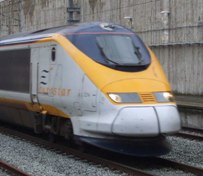
Eurostar 203High Speed 1 (HS1) would never have been built if the decision had been made on commercial criteria, or indeed on rational economic grounds. While the high-speed-rail lobby promotes the scheme as a success story, it was in fact a financial failure, marked by cost increases, repeated bailouts, disappointing passenger numbers and failed objectives.

The cost of the final HS1 scheme was far in excess of original estimates. In November 1985, British Rail’s preferred high-speed option was costed at about £1 billion in 2015 prices, while the final cost of the project has been estimated at approximately £11 billion in current prices.

Moreover, after the line opened below-forecast passenger numbers meant that the operator, Eurostar, had to be bailed out by the Department for Transport. Further government support for the struggling route was obtained via the access charges for (subsidised) Kent commuter services.

In addition to substantial operating subsidies, HS1 appears to have been artificially supported by the manipulation of the rail market. Some services from Kent stations to convenient London termini such as London Bridge, Cannon Street, Charing Cross and Victoria have been cut, while others have been slowed down, in an apparent attempt to drive passengers onto HS1. Commuters across the Southeastern franchise area also faced steep increases in fares to pay towards the high-speed services, whether they used them or not.

Many of the objectives of HS1 have also yet to be achieved. Plans to run international services from Stratford in London and through services to the Midlands and the North did not materialise due to low demand. At the time of writing, Eurostar trains do not stop at the £250 million Stratford International station. And notwithstanding exceptional traffic during the 2012 Olympics, it appears that the stop is only lightly used by commuters from Kent, often handling fewer than 1,000 passengers per day in each direction.

HS1 also provided a rationale for the construction of additional transport infrastructure at further expense to the taxpayer. A £250 million (2015 prices) extension to the Docklands Light Railway (DLR) was constructed largely to improve the accessibility of Stratford International. The line also provided a major justification for the redevelopment of Kings Cross St Pancras Underground station, at an additional cost of roughly £1 billion (2015 prices).

It should also be noted that much of the ‘regeneration’ along the route has been state-funded. The subsidised public sector and ‘crony capitalists’ dependent on government privileges dominate the post-Olympics redevelopment at Stratford. Major tenants will include the bloated bureaucracies of Transport for London and the Financial Conduct Authority.

Similarly, the government has sought to kick-start the stalled redevelopment of Ebbsfleet – a highly undesirable site, much of which is at risk of flooding – with the injection of at least £200 million of public funds.

The development of land near Kings Cross – also partly government funded – could well have been viable without the link, given the artificial scarcity of opportunities produced by strict planning controls in Central London. Indeed, the redevelopment of such areas may be delayed by the uncertainty and planning blight associated with major transport schemes.

Even if one makes highly optimistic (and questionable) assumptions about the wider economic gains from HS1, it is clear that the project represented very poor value for money compared with alternative investments in transport infrastructure. Indeed, when the deadweight losses from the tax bill and off-balance-sheet spending are included, it seems likely that the costs of the scheme have outweighed the benefits.


This analysis of High Speed 1 is partly based on research published in The High-Speed Gravy Train: Special Interests, Transport Policy and Government Spending.

Eurostar sale backed by government subsidies

The sale of Eurostar is a terrible deal for the taxpayer. It is only possible because the government subsidises loss-making high-speed commuter services to Kent and this funding now pays a high proportion of the infrastructure costs of High Speed 1. According to a 2012 National Audit Office analysis:

‘Under the new track access charging regime, access charges paid by Eurostar were reduced to the levels being paid by the domestic operator. A greater proportion of overall charges (60 per cent of HS1 Limited’s forecast access charge income over the 30-year concession) is now paid by the domestic operator because it uses more of the capacity of the line. To support domestic high speed services, the Department pays additional subsidy to the domestic train operating company. The Department forecasts that additional subsidy payments will amount to almost £110 million in 2011-12. If this level of subsidy in 2010 prices was to continue until the end of the concession in 2040, we estimate that the present value of subsidy payments will be some £2,100 million but the actual level will depend on the outcome of future franchise negotiations.’

The NAO report also reveals that five years ago, taxpayers also spent around £800 million (in current prices) bailing out Eurostar and its parent company. The massive losses accrued since the service started in 1994 were effectively written off. Passenger numbers have been over 60 per cent lower than originally forecast when the line was approved.

It seems highly unlikely that Eurostar would have been commercially viable without these bailouts and hidden subsidies. Indeed, the sale may be viewed as a form of government borrowing in the sense that it relies on ongoing taxpayer support for the route over the long term. The receipts are of course miniscule compared with the estimated £11 billion total cost (in 2015 prices) of High Speed 1.


An earlier version of this article appeared in City AM.

Britain’s rail policies defy economic logic

Britain could teach the world how not to run a railway. A combination of vast subsidies and overcrowded commuter trains means both taxpayers and passengers get a bad deal.

Privatisation should have delivered a dynamic free-market industry that improved services and cut costs. But the government wouldn’t give up control; it suffocated rail firms with regulation, choking off innovation. Worse still, an artificial structure was created that separated track from train, overturning almost two centuries of railway tradition and introducing layer upon layer of bureaucratic complexity.

Subsidies ballooned, more than doubling in real terms compared with the pre-privatisation era. Government support is now running at around £6 billion a year, meaning taxpayers now fund roughly 40 per cent of rail spending. Network Rail debt is forecast to hit £50 billion in 2020, a massive liability for future generations.

But the big winners from such largesse are not passengers. Armies of highly paid officials, lawyers and consultants have prospered as a result of the labyrinthine rules.

More positively, there has been a big rise in passenger traffic on the railways – and not just because anti-car policies have forced more travellers to use public transport. But with this growth in demand has come congestion.

Rush-hour commuter services into many major cities now suffer severe overcrowding. In the worst affected locations, the problem has gone beyond the problem of standing-room only. Passengers must often wait for the next train as they cannot physically fit into the carriages.

This is not how a market is supposed to operate. Businesses would normally take urgent steps to address such drastic declines in the quality of service. But the rail network is not a normal market, and train operators’ room for manoeuvre is severely limited.

The obvious solution to overcrowding is to vary fares in order to incentivise passengers to use less busy trains, thereby relieving the pressure in the peak hour. This is common practice in other sectors, such as airlines. However, on the most important commuter rail routes it is not permitted.

In the same way that Soviet apparatchiks determined the price of bread – creating shortages and long queues in the process – the government imposes price controls on the rail industry, and with similar results. In practice, someone travelling on a packed train at 8am typically pays the same as a passenger on a much quieter service at, say, 9am. Only later on, when off-peak tickets become available (usually at 9:30am) do prices drop.

This rigid regulated price structure has been disastrous. Not only has it produced sardine-like conditions for commuters; it has also created strong political pressure for the government to spend enormous sums increasing rail capacity to deal with the problem.

The amounts involved are astounding. The total cost of just two schemes in the South-East, Crossrail and Crossrail 2, is likely to reach £50 billion, enough to build roughly 1,000 miles of brand new six-lane motorway. In addition, overcrowding on the southern section of the West Coast Main Line has been used to justify the hugely expensive High Speed 2. As well as imposing a large burden on taxpayers, such London-focused, rail-centric spending is draining investment from better-value road schemes in the North of England.

Building new rail capacity is an expensive and complicated solution to a problem that in many cases could be solved relatively simply by allowing train operators more flexibility to smooth demand. It is far cheaper to make better use of existing infrastructure than to construct brand new lines.

The economic logic for deregulating fares is therefore compelling. Operators could then charge ‘super-peak’ prices on the very busiest services while offering cheaper tickets on quieter trains. This would not just benefit taxpayers by reducing the need for new infrastructure, it would also benefit many lower-paid workers such as cleaners and shop assistants, who often travel outside the peak hour but before current off-peak fares begin.

Flexible pricing could also encourage employers to alter their work patterns. For example, there are few good reasons why universities could not shift to a later schedule, allowing students and employees to benefit from lower travel costs.

Clearly, there would also be losers from deregulating fares. While many peak-hour commuters would rather pay more to avoid the crush, others might prefer overcrowded conditions to higher prices. The answer here is surely to offer more choice, for example by providing cut-price, standing-only carriages – effectively reintroducing third class.

A bigger obstacle to a change in policy is a far more powerful group of losers – the vested interests that profit from unnecessary public spending on new rail projects. Key beneficiaries include the bloated government agencies in charge of planning the schemes, and the firms winning the lucrative contracts to build the infrastructure and supply the trains.

Britain’s rail policies certainly defy economic logic, but they also allow various influential groups to make vast amounts of money at taxpayers’ expense. This means reform is unlikely.

YP February 2015

Unless otherwise indicated, all articles on this website are written in a personal capacity.

How HS2 could be descoped to hide cost overruns

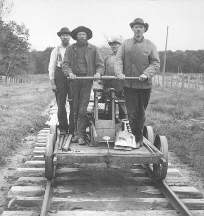
handcar204There are two main ways of dealing with cost overruns on big government projects without scrapping the scheme in question. The first is to ask the Treasury for more money – and this often works given the political embarrassment of half finished infrastructure.

The second method is ‘descoping’, which involves delivering less for the same budget. Examples include reducing the length of a route, making greater use of existing infrastructure, or lowering the quality of interconnections at stations. In recent years several schemes have been descoped to address rising budget estimates, including Crossrail, the Edinburgh tram and the planned high-speed line in California.

There is some tentative evidence that a similar approach has now been adopted for HS2, perhaps reflecting fears that further increases in the official budget would be politically disastrous at this stage of the project. (This may also explain why the budget is still quoted in 2011 prices in 2015). The HS1-HS2 link through Camden would appear to have been abandoned for the time being and there is now a major question mark over the £1 billion Warrington spur.

If the next government deployed economic logic it would scrap High Speed 2 entirely. However, the strength of the special interests backing HS2 raises the possibility of further descoping as a face-saving compromise.

Perhaps the least damaging ‘descoping’ option would be cancel current plans and speed up the existing West Coast main line instead, rebranding it as a high-speed route. One train operator has suggested London-Birmingham travel times could be cut to under one hour given improved signalling (and this would be to New Street, giving comparable overall travel times to HS2). At the same time various strategies could be undertaken to increase the capacity of the existing infrastructure (perhaps including the Chiltern Line to Birmingham).

Far less desirable, though still a big cost-saver and hugely preferable to current plans, would be to abandon Phase 2 entirely but keep elements of Phase 1. Now that Phase 1 is planned to reach Crewe, it could be argued by politicians that the line more or less reached the North of England. Northern cities could be bought off with (much cheaper) better links across the Pennines, together with improvements on the ECML.

Phase 1 could then be descoped by abandoning the Euston terminus and ending the line instead at Old Oak Common. This could reduce construction costs by roughly 25 per cent and would also undermine efforts by Transport for London and the Greater London Authority to ‘bully’ the Treasury into funding Crossrail 2 – now costed at an astounding £27 billion. Similarly the Birmingham spur could be scrapped with trains using existing tracks instead. Once again this could eliminate substantial ‘off balance sheet’ costs. Devious politicians might recycle some of these savings into longer tunnels in the Chilterns and better compensation to ‘buy-off’ opposition.

With the budget deficit stubbornly high and other spending priorities growing in political salience, cuts to the scope of HS2, and hopefully full cancellation, now seem increasingly likely. Observers should also watch out for hidden budget increases disguised by pushing elements of the project off-balance-sheet or delaying them until after the core scheme is completed.