New rail links can’t solve London’s transport crisis

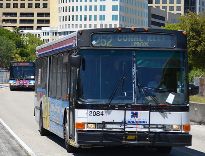
Busway 205London’s population is forecast to hit 10 million in 2030 and it’s difficult to see how the transport system will cope. Already a high proportion of commuters endure severe overcrowding, standing in jam-packed carriages or even struggling to find enough space to get on trains.

The government sees additional rail capacity as the best way to address rising demand. But this is unrealistic. With further spending cuts needed to reduce government debt, there is no way the Treasury will be able to fund the scale of investment required.

Part of the problem is that rail schemes in London are hugely expensive. The proposed Crossrail 2 scheme, which will add relatively little to the capital’s transport capacity, is predicted to cost an astounding £27 billion. Many more big projects would be needed for the network to accommodate the projected additional numbers of passengers. This is simply unaffordable. Public transport subsidies already cost taxpayers £12 billion a year, with roughly half of this spent in London.

An alternative strategy would be to manage demand by raising fares. Yet despite the economic logic, fare hikes have become politically toxic. Even rises of just 1 per cent above inflation are now deemed unacceptable.

Future governments will therefore face a difficult predicament. They won’t be able to afford to increase rail capacity to cope with growing demand and they will struggle to manage congestion with fare increases due to political constraints. But fortunately there is a potential solution if policymakers are prepared to think outside the box and take a more flexible approach to the use of transport infrastructure.

The rapidly growing cities of Latin America and Asia have faced similar issues: rising demand but severe budgetary constraints. But rather than investing in hyper-expensive rail infrastructure, local governments have often decided to build much cheaper high-capacity busways instead. From Istanbul to Mexico City, these busways carry vast numbers of commuters while offering cheap and affordable fares.

So, why not do this in London? One apparent reason is the lack of space, the city lacking the wide boulevards used for busways elsewhere. But London does have an extensive rail network with often vast corridors reaching right into the centre. This raises the question, would some of these routes deliver better value for money if they were converted into busways?

There is certainly strong evidence that this would bring a major increase in capacity. A single bus lane in New York’s Lincoln Tunnel carries up to 30,000 commuters in the peak hour, compared with a figure closer to 10,000 for a typical railway track entering Central London. And on former railway routes managed to avoid congestion, the potential capacity of busways would be much higher.

There could also be a big reduction in fares. Operating costs are likely to be much lower than on comparable rail routes. Busways are far simpler to manage and maintain.

Concerns about journey times can also be dismissed. On the shorter commuter routes where busways would be most appropriate, a combination of more direct services and increased frequency would deliver faster door-to-door travel times for the vast majority of passengers.

While busways may not be the best option in every location, the next government should not set transport infrastructure in stone. A more flexible approach may be the only way to avoid a severe capacity crunch.

For more details see Paving Over the Tracks…a better use of railways?

An earlier version of this article was published in City AM, February 2015

Unless otherwise stated, all articles on this website are written in a personal capacity.

More regulation, more surveillance and more enforcement: the policies cycling groups plan to impose on other road users

On 22 May a seminar on ‘Cyclists and the Law’ was held at City Hall. It was chaired by the Green Party’s Jenny Jones and featured Andrew Gilligan, the Mayor’s cycling tsar, among the speakers. From an economic perspective, two aspects of the seminar were striking.

Firstly, the importance of cars and lorries to London’s economy was almost completely ignored. According to Jenny Jones, ‘London has become a city of buses, pedestrians and bikes’. This simply isn’t true. Within London, cars carry as much passenger traffic as the Tube, buses, trains and bikes put together. It is correct, however, that car use has been falling in recent years. This is unsurprising in the context of falling living standards and transport/planning policies specifically designed to push people out of cars and onto other modes.

Nevertheless, the sheer scale of motoring within the capital means that any measures that increase delays are likely to have substantial economic costs. Using DfT estimates of the value of time and making a conservative allowance for running costs, it can be calculated that a 1 per cent increase in car journey times will impose costs of approximately £200 million on motorists in London [the precise accuracy of this figure is less important for this argument than its order of magnitude]. And further substantial costs would be imposed on other road vehicles such as HGVs. The impact of particular measures is of course time and place specific, but it was telling that the potential economic costs of some cycling policies, both to other road users and taxpayers, were barely discussed at the event.

Secondly, it was notable that the focus was almost entirely on ‘command and control’ measures centred on extra regulations, more surveillance, stricter enforcement and the centrally planned installation of new infrastructure. Once again there was little awareness of the economic costs of such policies or the misallocation of resources likely to result from the knowledge and incentive problems facing state bureaucracies.

It was disappointing that several win-win measures with the potential to benefit all road users were not mentioned. Removing a high proportion of traffic lights, for example, would speed up journeys and improve safety for both cyclists and motorists. Better road maintenance – repair of potholes and so on – would also have major benefits for cyclists and drivers.

A list of policies advocated at the seminar is provided below. The first set was supplied by the event organisers and the second set by speakers and audience members (many of whom represented cycling or road safety groups).

  • Stricter liability – the assumption that injured cyclists deserve compensation unless it can be proved otherwise, or the Dutch scheme where at least 50% of responsibility for all cycle-related collisions lies with drivers
  • Legal priority for ‘straight across’ movements at junctions
  • European standards on vehicle design and fitting safety equipment, especially HGVs
  • Advanced Stop Lines to be treated the same as yellow box junctions
  • All KSIs to be properly investigated and the police should adhere to the Road Death Investigation Manual
  • Enforcement of 20mph limits by police
  • Close proximity collisions should be prosecuted using plain clothes police officers with cameras
  • Road crash victims of speeding, drunk and careless drivers should be included in the Government’s Code for Victims
  • The courts should make greater use of driving bans in sentencing and should be much firmer in resisting pleas of ‘hardship’, particularly when considering bans
  • Coroners should make greater use of their powers to make ‘Section 43’ reports to highlight solutions that might prevent deaths, and particularly the recurrent causes of deaths
  • Cycle lanes should continue across side roads
  • Implement 20 mph limits on main roads, unless a case for exemption has been made and approved
  • All major new developments should include Crossrail-type clauses on HGV safety training and joining the Fleet Operator Recognition Scheme (FORS)

Further policies advocated by panellists and audience members included:

  • Mandatory fitting of ‘black boxes’ in motor vehicles to monitor driving behaviour, including speed – possibly starting with commercial vehicles
  • Mandatory fitting of proximity sensors to large vehicles
  • Restricting HGV movements during peak hours
  • Use planning controls to force better HGV behaviour
  • Greater use of health and safety law to prosecute commercial operators
  • Police to seize and examine motorists’ mobile phones after accidents
  • Introducing new elements to driving tests
  • Installing average speed cameras to enforce 20 mph zones
  • Greater use of helmet camera video to monitor motorists
  • Prohibiting parking in on-road cycle lanes
  • Reduced stopping rights along cycle lanes, e.g. for deliveries
  • Re-allocating road space to cyclists from other road users
  • Expanding the cycling task force
  • Giving TFL the right to fine motorists entering ASLs and cycle lanes
  • Reducing the level of motorised traffic
  • Installing Dutch roundabouts
  • Attaching conditions to the award of parking permits to influence driver behaviour
  • Tying the amount paid in ‘road tax’ to driver behaviour

See also: Tour de France road closures could be avoided